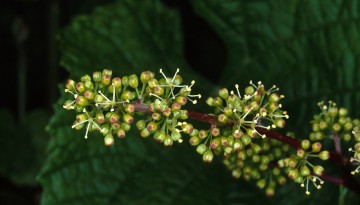
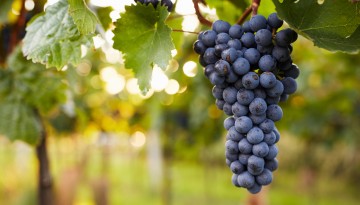
Cornell scientists have worked with the University of California, Davis, to identify the DNA markers that determine grape flower sex. In the process, they also pinpointed the genetic origins of the perfect flower.
Led by BTI faculty member Fay-Wei Li, researchers have discovered a new species of cyanobacteria, Anthocerotibacter panamensis, which could help illuminate how photosynthesis evolved to create the world as we know it.
Cornell engineers and plant scientists have teamed up to develop a low-cost system that allows grape growers to predict their yields much earlier in the season and more accurately than costly traditional methods.
More than 30 students presented their research on a wide range of topics during the 35th Cornell Undergraduate Research Board Spring Symposium, held virtually May 4-7.
Michael L. Thonney, professor in the Department of Animal Science and director of graduate studies in the field of Animal Science, died April 23 in Ithaca. He was 71.
Diversity of children’s diets and food security improved for households after Tanzanian farmers learned about sustainable crop-growing methods, gender equity, nutrition and climate change from peer mentors.
The College of Arts & Sciences recognizes excellence in teaching and advising this year, honoring Samantha Sheppard, recipient of the 2021 Robert and Helen Appel Fellowship for Humanists and Social Scientists; and Jun “Kelly” Liu and Phillip Milner, recipients of the 2021 Robert A. and Donna B. Paul Academic Advising Award, among others.