The free app from Cornell Lab of Ornithology identifies the sounds of more than 400 species from the U.S. and Canada, even when multiple birds are singing at the same time.
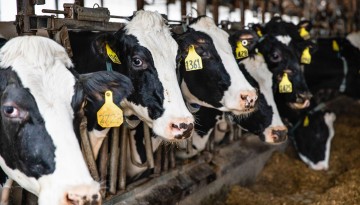
Four undergraduates from New York state who are majoring in animal science each received $20,000 scholarships this past year through the Chobani Scholars Program, to help them achieve their dairy career ambitions across four years of study.
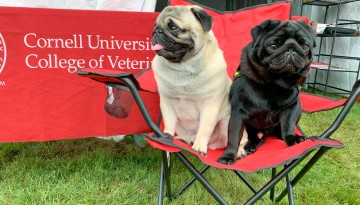
For the third year in a row, veterinarians from the College of Veterinary Medicine provided on-site care for the most elite dogs in the world, at the Westminster Kennel Club Dog Show, June 12-13.
Julius Judd, a fourth-year doctoral student in the graduate field of molecular biology and genetics, has been selected for the 2021 Harry and Samuel Mann Outstanding Graduate Student Award.
Kevin Kniffin, assistant professor at Dyson, is leading an NSF-funded study examining the career outcomes of interdisciplinary STEM graduate students, the environments in which they train, and how those environments relate to career outcomes.
The $24 million gift will enable the center’s unique mission to use bioacoustics to help conserve biodiversity in some of the most remote yet species-rich parts of the world.
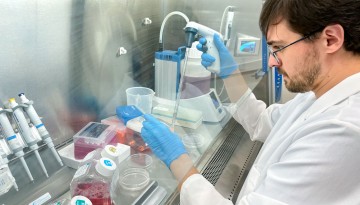
A Cornell-led research team’s improved cell therapy device effectively secreted insulin and controlled blood sugar in diabetic mice for up to six months – showing promise for the possibility of an effective, complication-free treatment for Type 1 diabetes, a chronic disease with no known cure.
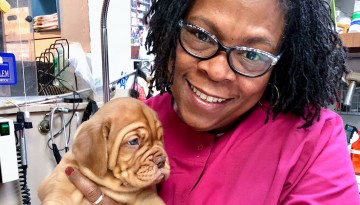
Dr. Julie Butler, D.V.M. ’83, cared for Harlem and its pets for 30 years. Her death due to COVID-19 inspired the College of Veterinary Medicine to establish a scholarship in her name.
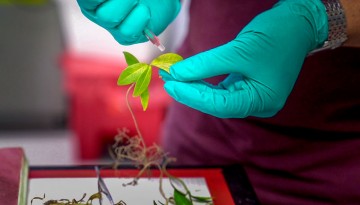
A breakthrough technology uses nanoscale sensors and fiber optics to measure water status just inside a leaf’s surface, providing a tool to greatly advance our understanding of basic plant biology, and opening the door for breeding more drought-resistant crops.