Max the rough collie is still spry at age 10, but last May his exuberance led him to the emergency room at the Cornell University Hospital for Animals. Thanks to veterinarians, Max has become an example of what rehabilitation therapy can do for an injured pet of his age.
Colin Parrish, Ph.D. ’84, the John M. Olin Professor of Virology at the Baker Institute for Animal Health, has been elected president of the American Society for Virology. Parrish will take office in July 2021 and serve a three-year term.
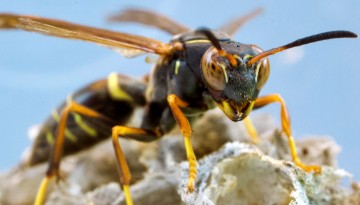
Just as humans are challenged from the social isolation caused by the coronavirus pandemic, a new study finds that a solitary lifestyle has profound effects on the brains of a social insect: paper wasps.
Representing Cornell’s four contract colleges, the recipients of the 2021 State University of New York Chancellor’s Award for Student Excellence will be recognized during a virtual ceremony April 14.
The findings from Boyce Thompson Institute researchers could point the way to cost-effective, eco-friendly ways of enriching soil and reducing reliance on conventional fertilizers.
Cornell will host a virtual Q&A and panel discussion, “The Science behind COVID-19 Vaccines: A Conversation with Cornell’s Immunology Experts,” Monday April 12 from 4 to 5 p.m.
Ray Jayawardhana, the Harold Tanner Dean of Arts and Sciences, has announced transitions in the College’s senior leadership team that will take place on July 1.