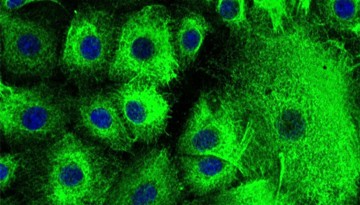
Dr. Gerlinde Van de Walle recently received a grant from the Foundation for Food and Agriculture Research to advance her stem cell research to develop a potential therapy for mastitis in cows.
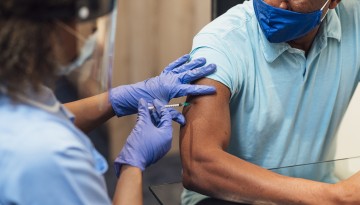
New York Gov. Andrew M. Cuomo on March 24 announced the launch of the state’s free, online Citizen Public Health Training Course, delivered by the state Department of Health in partnership with Cornell.
Female veterinarians make less than their male counterparts, new research from the College of Veterinary Medicine has found – with an annual difference of around $100,000 among top earners.
Two doctoral candidates engaged scholars nationwide in a conversation about strategies to keep researchers safe while conducting fieldwork through a paper presentation and expert-led panel discussion.
Located a short drive to the east of Cornell’s main campus, on Hungerford Hill, the Janet L. Swanson Wildlife Hospital is a hidden treasure, providing lifesaving medical care for native wild animals.
A new Penn State and Cornell study describes an effort to produce the most comprehensive and high-resolution map yet of chromosome architecture and gene regulation in yeast.
Barbara Baird, the Horace White Professor of Chemistry and Chemical Biology in the College of Arts and Sciences, has been honored as one of the 2021 Distinguished Women in Chemistry or Chemical Engineering by the International…