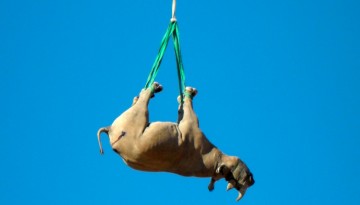
When moving endangered rhinoceroses in an effort to save the species, hanging them upside down by their feet is the safest way to go, new research from College of Veterinary Medicine has found.
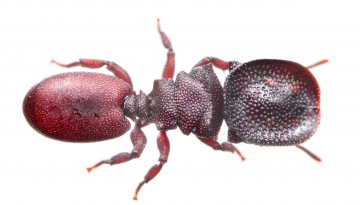
Gut bacteria in a species of herbivorous ant play a major role in processing nutrients that allow the ants to build tough exoskeletons, an international team of researchers has found.
A true believer in mediation and arbitration techniques as a means of solving societal problems, Marcia Greenbaum’s work was felt across the nation and in Eastern Europe.
Researchers investigating the evolutionary origins of a novel defensive trait by snakes – venom spitting – offer the first evidence that snake venom evolution is associated with defense, rather than solely to help capture prey.
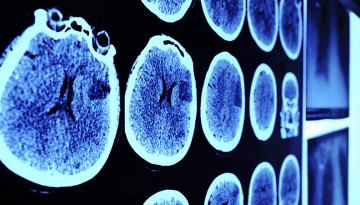
A new study uses computer modeling to show, for the first time, that the development and evolution of secondary visual cortical areas in the brain can be explained by the same process.
Ian Owens, the Smithsonian National Museum of Natural History’s deputy director, has been named the next executive director of the Cornell Lab of Ornithology. He will take the helm of the 106-year-old institution on July 1.
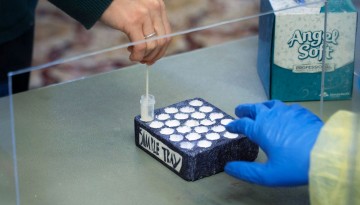
One unsung aspect of Cornell’s success in managing the spread of COVID-19 on campus has been a commitment to analyze and learn, to pivot and adapt. As a result, the university will implement tweaks to its COVID-19 response plan this Spring semester.
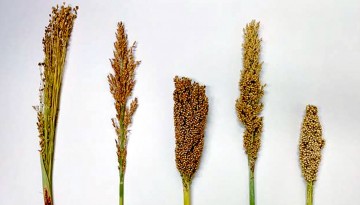
A new study found that harmful mutations in sorghum landraces – early domesticated crops – decreased compared to their wild relatives through the course of domestication and breeding.
New research reveals how proteins, called “pioneer transcription factors,” help turn on key genes that give cell types their unique properties and functions.