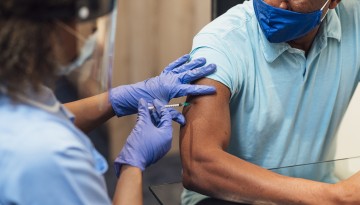
Cornell is partnering with New York state and Northwell Health System to develop and train the nation’s first state public health corps, which will support COVID-19 vaccination and improve long-term public health outcomes.
Changes make the curriculum easier for students to navigate, simplify the graduation requirements and expand student opportunities for interdisciplinary work and faculty opportunities for innovative teaching.
The College Scholar Program in the College of Arts & Sciences allows students to design their own interdisciplinary major, organized around a question or issue of interest, and pursue a course of study that cannot be found in an established major.
The grant from The Andrew W. Mellon Foundation’s Just Futures Initiative will bring together scholars from across the university and beyond to study the links between racism, dispossession and migration.
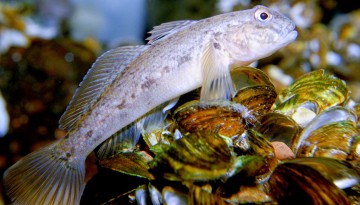
In a proof-of-principle study, Cornell researchers describe a new technique in which they analyzed environmental DNA – or eDNA – from water samples in Cayuga Lake to gather nuanced information about the presence of invasive round goby fish.
As part of its mission to make Cornell a more diverse and inclusive environment for faculty, staff and students, the Presidential Advisors on Diversity and Equity have awarded three grants of $15,000 apiece for 2021 programming.
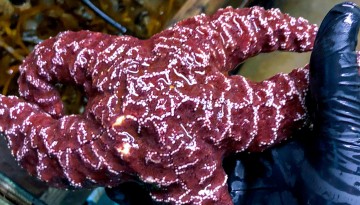
New Cornell-led research suggests that starfish, victims of sea star wasting disease, may actually be in respiratory distress, as nearby organic matter and warming oceans rob them of their “breath.”
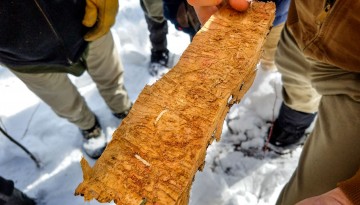
Cornell will be removing more than 1,700 of its ash trees infested by devastating emerald ash borer insects, mostly between January and March 2021, to reduce potential harm to people and property.