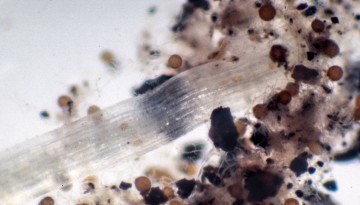
A new grant will investigate how bacteria that live inside the cells of fungi may shape the biology, evolution, biodiversity and function of these fungi – research with important practical applications for industry, sustainable agriculture and preventing food spoilage.
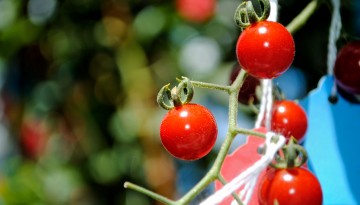
Researchers from Boyce Thompson Institute have created a reference genome for the predecessor of the modern tomato, and discovered sections that underlie fruit flavor and disease resistance, among other characteristics.
Cornell faculty have until Friday, Dec. 11, to submit nominations for the A.D. White Professors-at-Large Program, specifically in the areas of humanities, life sciences and physical sciences.
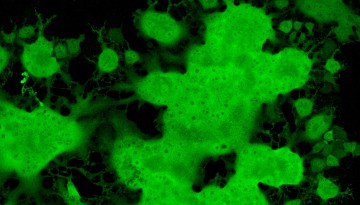
Scientists at the College of Veterinary Medicine developed a new technology for studying viruses directly in their host cells, opening the door to finding a functional cure for HIV – and a possible tool in the fight against COVID-19.
U.S. pollution regulations meant to protect people from dirty air are also saving North America’s birds, according to a new study conducted by scientists at Cornell and the University of Oregon.
Five Cornell faculty members have been elected fellows of the American Association for the Advancement of Science, the world’s largest general scientific society.
A Cornell project funded by two separate three-year grants will develop worm-like, soil-swimming robots to sense and record soil properties, water, the soil microbiome and how roots grow.
New research out of the College of Veterinary Medicine has revealed that vaccination of endangered Siberian tigers is the only practical strategy to protect these big cats from potentially deadly canine distemper virus.
A multi-institution team co-led by a Cornell researcher has identified the genetic mechanisms that enable the production of a deadly toxin called Victorin – the causal agent for Victoria blight of oats, a disease that wiped out oat crops in the U.S. in the 1940s.