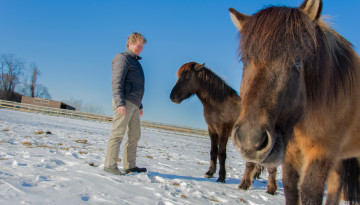
Horses exposed early in life to an allergen were less likely to react when exposed again later in life, according to a new study of Icelandic horses at Cornell.
An interdisciplinary team of researchers determined that organic residues of plant oils are poorly preserved in calcareous soils from the Mediterranean, leading decades of archaeologists to likely misidentify olive oil in ceramic artifacts.
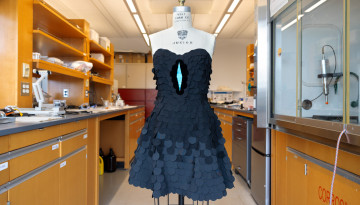
The color “ultrablack” has a variety of uses, including in cameras, solar panels and telescopes, but it’s difficult to produce and can appear less black when viewed at an angle. A Cornell lab has devised a simple method for making the elusive color.
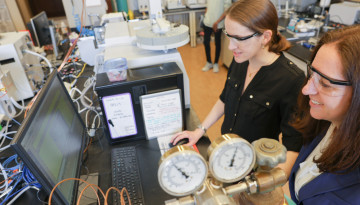
A project led by Cornell’s Center for Point of Care Technologies for Nutrition, Infection and Cancer to develop a low-cost, battery-powered device for sample preparation in tuberculosis (TB) testing in areas with limited lab access and infrastructure, has received a $250,000 grant from the Gates Foundation.
For research excellence into how living structures recover and preserve order in morphology amid constant disruption, postdoctoral scientist Lanxi Hu has been awarded the Weill Institute for Cell and Molecular Biology’s 2025 Sam and Nancy Fleming Research Fellowship.
The New York Cooperative Fish and Wildlife Research Unit has been helping state and federal agencies manage fish and wildlife and protect ecosystems for over 60 years.