Cornell researchers have discovered a previously unknown way plants regulate water that is so fundamental it may change plant biology textbooks – and open the door to breeding more drought-tolerant crops.
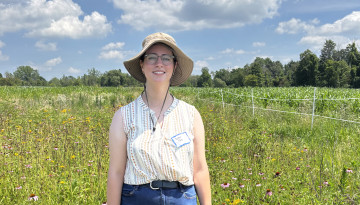
Rebecca Stup ’23, MS ’26, has been exploring planting wildflower strips along farmland as a strategy to increase biodiversity, attract pollinators and combat weeds.
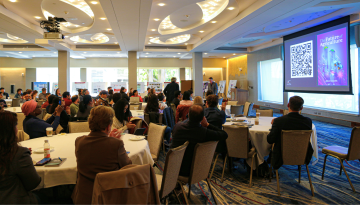
The Cornell Institute for Digital Agriculture (CIDA) convened its annual workshop on Oct. 21, 2025, at the Statler Hotel on the Cornell University campus. The day-long gathering featured project updates, networking, and a keynote exploring how artificial intelligence is reshaping food systems.
Cornell researchers have developed a powerful new biosensor that reveals, in unprecedented detail, how and where kinases – enzymes that control nearly all cellular processes – turn on and off inside living cells.
Findings from a recent study show how randomness and growth together create the striking cellular patterns that shape plant organs—and perhaps all multicellular life.
Rocky Kambo, director of operations and business for the Animal Health Diagnostic Center at the Cornell University College of Veterinary Medicine, will transition to the role of associate dean of finance and administration for the College of Agriculture and Life Sciences.