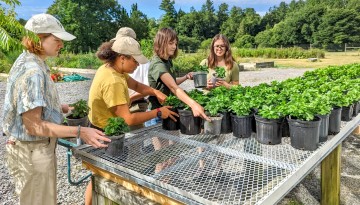
Cornell Botanic Gardens’ Learning by Leading program is an engaged learning initiative launched in 2021 to support a new generation of environmental leaders.
Recent scientific discoveries have shown that Neanderthal genes comprise some 1 to 4% of the genome of present-day humans whose ancestors migrated out of Africa, but the question remained open on how much those genes are still actively influencing human traits — until now.
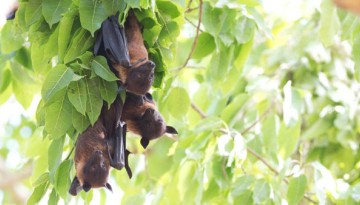
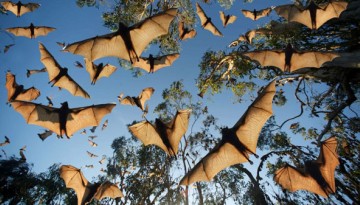
Authors from the College of Veterinary Medicine say allowing bats to survive and thrive by letting them exist undisturbed in their habitats can pay other dividends around the world.
The smallest and shallowest bodies of water exhibit the greatest variability of greenhouse gas emissions over time, according to a paper that could help improve the accuracy of climate models.
A Cornell webinar June 26 will discuss how protection and restoration of natural habitats can prevent pandemics while addressing climate change and biodiversity loss.
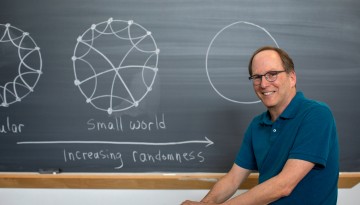
In 1998, Professor Steven Strogatz and then-student Duncan Watts, Ph.D. '97, published a model that launched the field of network science – the results of which are ubiquitous in today’s world.
A new study finds thathundreds of bacterial groups have evolved in the guts of primate species over millions of years, but humans have lost close to half of these symbiotic bacteria.
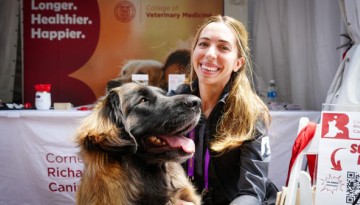
On the final night of this year's Westminster Kennel Club Dog Show, the Riney Canine Health Center was recognized with a $10,000 gift from show sponsor Embark Veterinary, Inc. to support their work advancing studies that have the potential to improve the overall health and well-being of dogs’ lives.
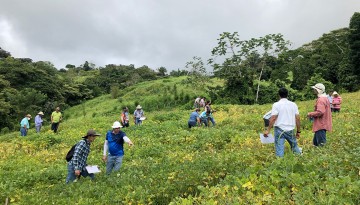
Research by Ph.D. student Sergio Puerto involved recruiting farmers as citizen-scientists to grow and assess seeds under a far greater diversity of conditions than would be possible for plant breeders to do alone.