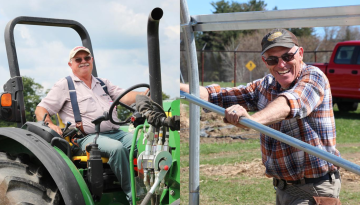
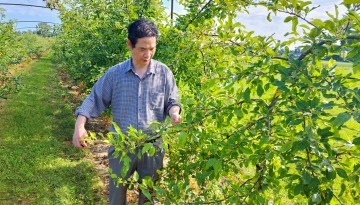
Cornell Agricultural Experiment Station farm managers Steve McKay and Paul Stachowski have retired after 38 and 32 years of service to the university, respectively.
A new research and test kitchen for food entrepreneurs has opened at Cornell AgriTech, further enriching a robust ecosystem designed to help grow New York’s food and agriculture industries.
As concerns about climate change intensify, researchers are exploring the potential for large-scale human intervention in the Earth’s climate system, a strategy sometimes referred to as geoengineering. Two leading researchers in the area discuss how their research in sunlight reflection methods fits into the bigger picture of potential climate solutions.
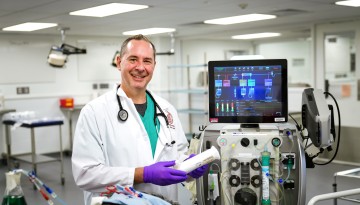
The Cornell University Hospital for Animals now has the capability of cleansing patients’ blood outside of their bodies, opening the door to new treatment options, including dialysis for animals with kidney failure.
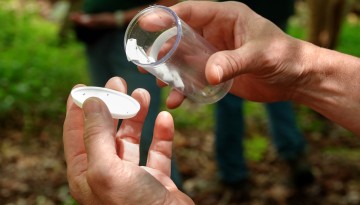
Researchers are hoping a fly no larger than a grain of rice and a predatory beetle may work together to combat an invasive pest that is devastating hemlocks in Fall Creek and throughout eastern North America.
Plant geneticists have identified a mutation in a gene that causes the “weeping” architecture – branches growing downwards – in apple trees, a finding that could improve orchard fruit production.
An interdisciplinary research team received a five-year, $2 million grant from the National Science Foundation to develop a new generation of biosynthetic lubricants that have the potential to treat arthritis and reduce the painful friction of artificial joints.