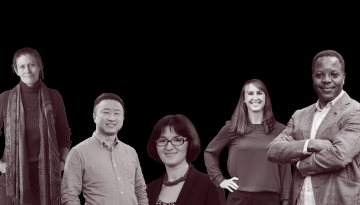
Johannes Lehmann, Colin Parrish, Bik-Kwoon Tye and Michelle Wang are Cornell’s 2023 electees to the National Academy of Sciences (NAS), the academy announced May 2 at the close of its 160th annual meeting.
A group of Cornell staff, alumni, students and volunteers have worked to retrofit windows on a few buildings so birds can recognize and avoid flying into them, with plans to address the issue on more around the Ithaca campus.
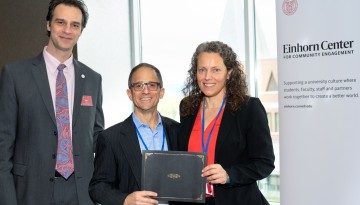
Gen Meredith, professor of practice in the College of Veterinary Medicine’s Department of Public and Ecosystem Health and associate director of the Cornell Master of Public Health Program, has received the 2023 Kaplan Family Distinguished Faculty Fellowship from the David M. Einhorn Center for Community Engagement.
Christine Smart, a crop pathologist known for her leadership in protecting the health of specialty crops across New York state, has been appointed the Goichman Family Director of Cornell AgriTech, effective Oct. 1.
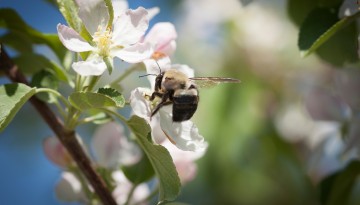
For the first time, Honey Bees: Their Intriguing Biology and Interactions with Humans (ENTOM 2030) will be offered during Summer Session 2023.This online course, taught by Dr. Marina Caillaud, a lecturer in the Department of Entomology, will examine the lives of bees, their contribution to humanity through the ages, as well as the threats they are currently facing.
As the world population grows and climate change threatens agriculture and global food systems, researchers across Cornell CALS are reimagining agri-food systems for the 21st century.
A Cornell-led project used ancient DNA extraction and analysis to reconstruct the phenotype of the renowned sled dog Balto, revealing his lineage was genetically healthier and less inbred than modern breeds.
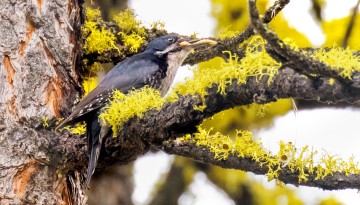
Scientists have created a tool based on the habitat preferences of the black-backed woodpecker to help forest managers make decisions that promote regrowth and biodiversity following wildfires.