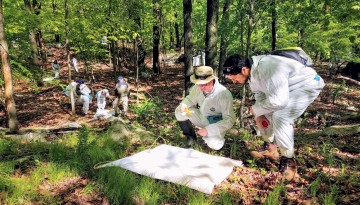
The Northeast Regional Center for Excellence in Vector-Borne Diseases, led by Cornell, has received a five-year, $8.7 million award from the Centers for Disease Control and Prevention to train and educate vector-borne disease professionals.
Cornell University’s Life Sciences Technology Innovation Fellowship, formerly known as the BioEntrepreneurship Initiative, enters its second year in 2023-24 with a new cohort of 15 business students and 12 researchers.
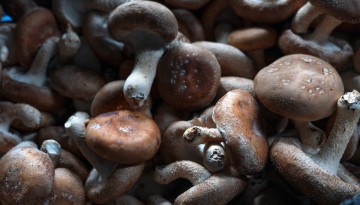
With Cornell's help, an Amish farmer grows shiitake mushrooms and solves his financial woes, and an entrepreneur and a chef, both from China, use the mushrooms for a sauce that is now on the market.
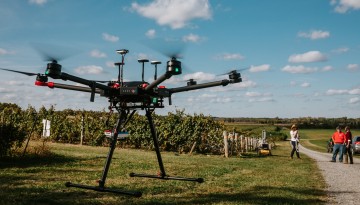
Students can now choose a new minor in digital agriculture, a multidisciplinary field focused on food and agriculture production systems, but with an increasingly broader span of applications and interests.
A new study testing the accuracy of existing methods used to predict the genetic variation that cause infertility found that relying on computational or in vitro experiments alone is insufficient.
Heat-retaining buildings and paved surfaces are directly related to a loss in bird diversity, according to a study by scientists at the Cornell Lab of Ornithology and Zhejiang University in China.