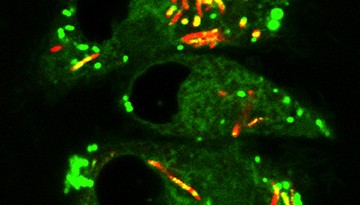
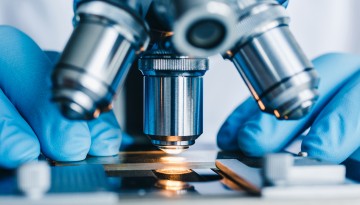
A novel compound, developed by College of Veterinary Medicine researchers, that has the potential to starve the bacteria that causes tuberculosis – the world’s second-leading infectious killer – is entering human clinical trials.
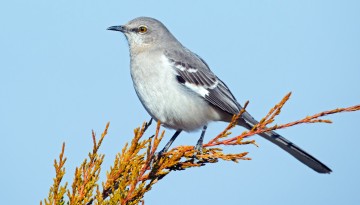
Using Cornell Lab of Ornithology data, a new study finds that birds that have evolved to be more social are less likely to kick other birds off a bird feeder or a perch.
A simple model that simultaneously simulates swarming behaviors and synchronized timing takes a step toward engineering microrobots and furthering our understanding of such phenomena in biology.
Researchers studying statistics applications in systems biology and next-generation wireless technology are among the nine Cornell faculty members who’ve received National Science Foundation Faculty Early Career Development Awards.
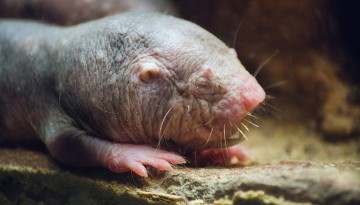
A new study sheds light on unique processes that bestow naked mole-rats with what seems like eternal fertility, findings that could eventually point to new therapies for people.
Disabling a single regulatory gene in a species of sea anemone caused a cell used for hunting and self-defense to completely shift its form and function, opening a door to better understanding evolutionary mechanisms, according to a new study.
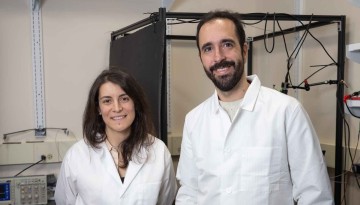
A pair of researchers in the Department of Neurobiology and Behavior are designing new technology and research methods to discover how brain circuits support learning and memory.
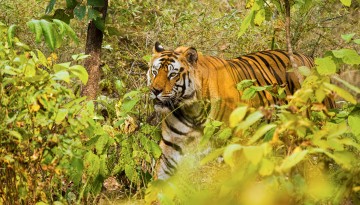
Although researchers have suspected distemper was infecting tigers and leopards, this study is the first definitive proof of infection in Nepal’s big cats.
Avery August, Ph.D. ’94, and David Russell, both professors in the Department of Microbiology and Immunology in the College of Veterinary Medicine, have been elected to the American Academy of Microbiology.