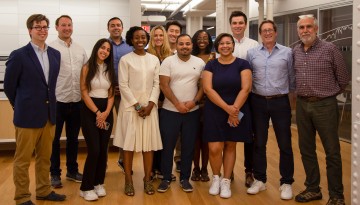
Students in the Milstein Program in Technology & Humanity spent eight weeks this summer exploring New York City and thinking deeply about the implications of technology.
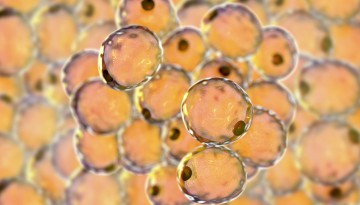
Disruption of the circadian clocks that keep the body and its cells entrained to the 24-hour day-night cycle plays a critical role in weight gain, according to a pair of studies by Weill Cornell Medicine investigators.
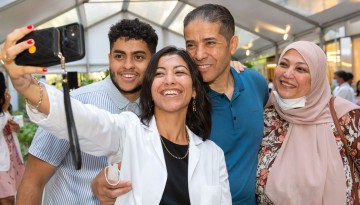
On Aug. 16, the Class of 2026 received their short white coats during a Weill Cornell Medicine ceremony, officially marking the beginning of their medical educations.
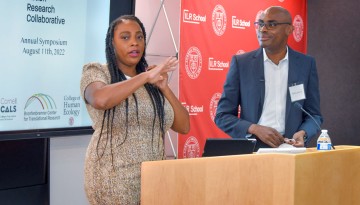
Members of Cornell’s Action Research Collaborative joined representatives from New York City agencies at a symposium Aug. 11 to discuss innovative new solutions aimed at dismantling the systemic racism that has led to inequities around food, nutrition, education, health and employment.
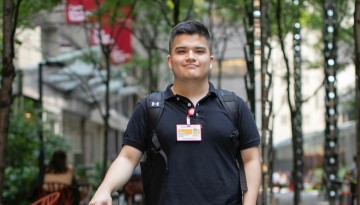
Student entrepreneurs in the Johnson Summer Startup Accelerator gathered in Manhattan for the first annual JSSA New York City Trek, a day dedicated to engaging with NYC-based investors, founders, and entrepreneurs.
Wolchok, an internationally acclaimed medical oncologist, will lead a clinical enterprise dedicated to translating groundbreaking discoveries on the underlying causes of cancer into cutting-edge treatment approaches and personalized therapies to improve patient outcomes.