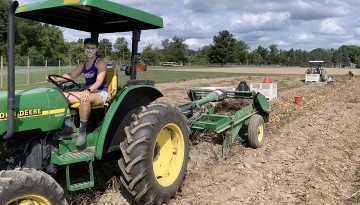
New funding from the U.S. Department of Agriculture’s National Institute of Food and Agriculture will help the Cornell Farmworker Program continue to reach more than 3,000 New York farmworkers with critical health and legal information.
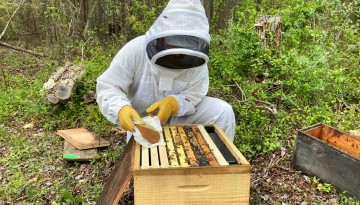
A Cornell-developed technology provides beekeepers, consumers and farmers with an antidote for deadly pesticides, which kill wild and managed bees that pollinate crops.
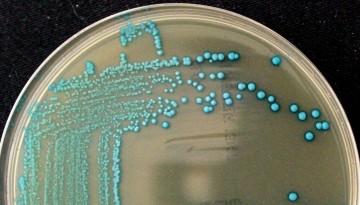
While examining the prevalence of listeriain agricultural soil, Cornell food scientists have stumbled upon five previously unknown and novel relatives of the bacteria.
Cornell engineers and plant scientists have teamed up to develop a low-cost system that allows grape growers to predict their yields much earlier in the season and more accurately than costly traditional methods.
In a case won by Cornell Law School's First Amendment Clinic, law student Rob Ward addressed a novel question in New York state court concerning recent changes to state statutes intended to protect free speech in public matters.
Serving residents of two upstate New York counties, the HOPES program led by Rana Zadeh is providing secure medication organizers and training to help prevent potentially dangerous and costly mishaps.
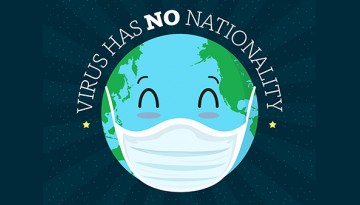
Amy Somchanhmavong, Ithaca Asian American Associations, gives a local perspective on anti-Asian/Pacific Islander bias, and discusses the "Virus has no nationality campaign."
Participants in a new class – designed to bring together formerly incarcerated and traditional Cornell students – have written, workshopped and performed an ensemble theatrical piece that will premiere online May 16.
Ed Camacho of the Cornell NanoScale Science and Technology Facility has created what is thought to be the world’s smallest rendition of Cornell’s iconic McGraw Tower – complete with its 161 interior steps, two sets of stairs and 21 bells.