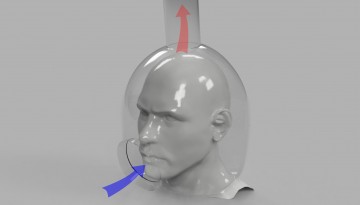
Simulations show the helmet, designed by the Esmaily Lab, prevents 99.6% of virus-containing droplets exhaled by medical patients from reaching the environment.
Héctor D. Abruña has been honored by the American Chemical Society with the ACS National Award in Analytical Chemistry for his pioneering work in electrochemistry, including the development of fuel cell and battery materials.
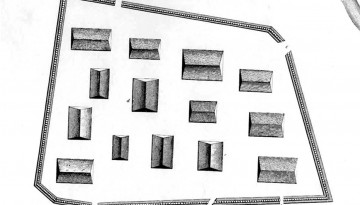
Cornell and National Park Service researchers have pinpointed the exact location of a Tlingit fort in Sitka, Alaska used in 1804 to defend against Russian colonization forces.
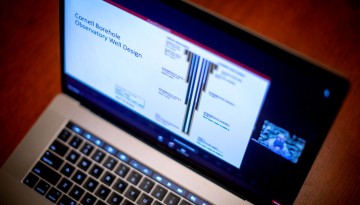
Cornell is moving forward, and underground, with plans to drill an observatory borehole to explore the viability – and ensure the safety – of using geothermal energy to heat the Ithaca campus.
Far below the gaseous atmospheric shroud on Saturn’s largest moon, Titan, lies Kraken Mare, a sea of liquid methane, which astronomers have estimated to be at least 1,000 feet deep.
The annual Cornell Day of Data, this year a two-day virtual event, Jan. 27-28, brings together professors, researchers and students from across the university to share techniques, tools and insights in working with data.
Changes make the curriculum easier for students to navigate, simplify the graduation requirements and expand student opportunities for interdisciplinary work and faculty opportunities for innovative teaching.
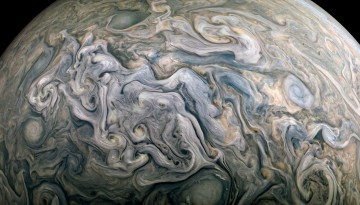
NASA’s Juno spacecraft and the InSight lander have both received mission extensions, the space agency announced Jan. 8. Cornell astronomers serve key roles on both projects.
The College Scholar Program in the College of Arts & Sciences allows students to design their own interdisciplinary major, organized around a question or issue of interest, and pursue a course of study that cannot be found in an established major.