Cornell faculty have until Friday, Dec. 11, to submit nominations for the A.D. White Professors-at-Large Program, specifically in the areas of humanities, life sciences and physical sciences.
Five Cornell faculty members have been elected fellows of the American Association for the Advancement of Science, the world’s largest general scientific society.
A Cornell project funded by two separate three-year grants will develop worm-like, soil-swimming robots to sense and record soil properties, water, the soil microbiome and how roots grow.
The large Cornell-designed telescopic ‘ear’ at Arecibo, Puerto Rico, which listened for the enlightening crackle of the cosmos for nearly six decades, now hears silence.
Floods of unimaginable magnitude once washed through Mars’ Gale Crater equator around 4 billion years ago – a finding that hints at the possibility that life may have existed there.
Years before COVID-19 turned into a global pandemic, biomolecular engineer Susan Daniel was already looking for ways to defeat it. Now she’s expanding her coronavirus studies, blending engineering with virology and data science.
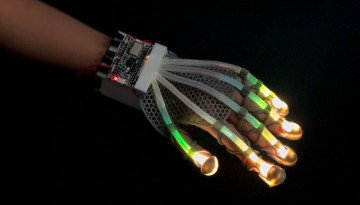
Cornell researchers have created a fiber-optic sensor that combines low-cost LEDs and dyes, resulting in a stretchable “skin” that detects deformations such as pressure, bending and strain.
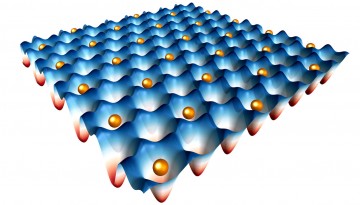
A Cornell-led collaboration has developed a way to stack two-dimensional semiconductors and trap electrons in a repeating pattern that forms the long-hypothesized Wigner crystal.