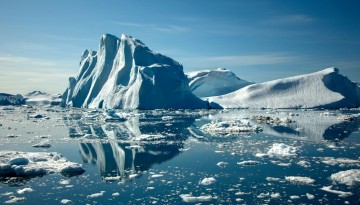
Thanks to $1 million in new grants, Cornell scientists will model adding reflective aerosols into the stratosphere, which may deflect enough sunbeams to reduce Earth’s temperature and limit climate change.
A Cornell-led collaboration developed a 3D printing technique that creates cellular metallic materials by smashing together powder particles at supersonic speed.
Warren Knapp, 82, professor emeritus of meteorology and climate in the Earth and atmospheric sciences, and the second director of Cornell’s Northeast Regional Climate Center, died Oct. 3 in Ithaca.
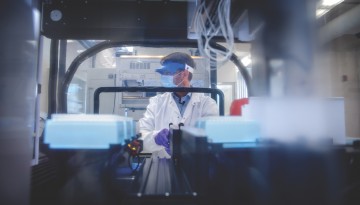
Cornell researchers are working collaboratively at the forefront of their fields to re-examine and adapt their innovations to develop the tests, treatments and knowledge necessary to end the COVID-19 pandemic.
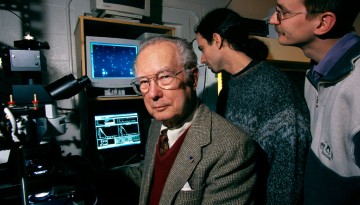
Applied physicist Watt W. Webb, the S.B. Eckert Professor of Engineering Emeritus and a pioneer in methods for imaging living biological systems, died Oct. 29. He was 93.
The National Science Foundation has awarded the Cornell High Energy Synchrotron Source $32.6 million to build a High Magnetic Field beamline, which will allow researchers to conduct precision X-ray studies of materials in persistent magnetic fields.
Students and faculty in the College of Engineering are leveraging the university’s robust entrepreneurial ecosystem to launch a variety of tech startups.