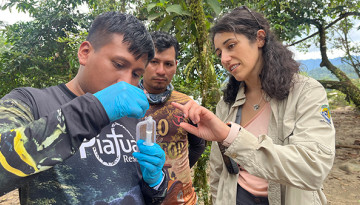
A Cornell graduate student and indigenous Ecuadorian partners are sampling eDNA in Amazonian riverways to understand how gold mining and other human disturbances impact aquatic biodiversity and ecosystem health.
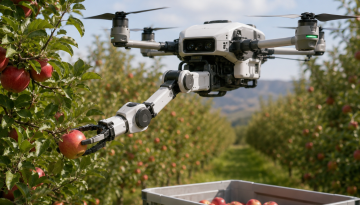
Thirteen Cornell students will spend the summer advancing new technologies for agriculture after receiving 2026 Research Innovation Fund awards from the Cornell Institute for Digital Agriculture.
The Center for Technology Licensing brought together Cornell inventors in Ithaca and at Weill Cornell Medicine for Bearers of Innovation: A One Cornell Celebration, recognizing CTL-connected inventors from the past two fiscal years.
A new single-protein analysis technique gives researchers an unprecedented ability to study scramblases, and could someday be useful in devising new strategies against multiple diseases.
Americans are more willing to engage with opposing views than popular narratives about echo chambers presume, and perceived common ground can help moderate positions.
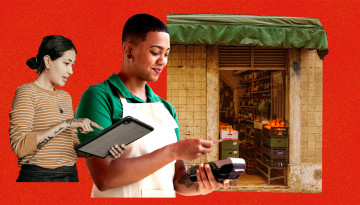
A research team led by Shreya Kankanhalli of the SC Johnson College found that supporting merchants during and after installation of digital payment devices resulted in significantly greater uptake of the technology.