Many medical studies record a patient’s race using only the broad categories from the U.S. Census, which may conceal racial health disparities, a new Cornell-led study reports.
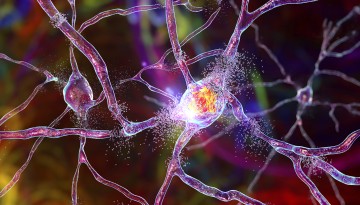
A non-opioid designer molecule for treating chronic neuropathic pain has had promising results in a preclinical study conducted by researchers at Weill Cornell Medicine and the Burke Neurological Institute.
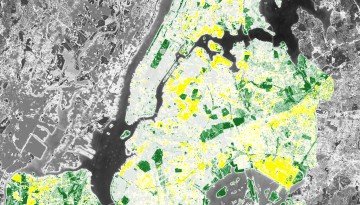
Tree Folio NYC creates a high-resolution “digital twin” of New York City’s urban canopy, simulating how local conditions influence shading that is important to mitigating climate change and heat island effects.
Despite broad scientific consensus that climate change has more serious consequences for some groups – particularly those already socially or economically disadvantaged – a large swath of people in the U.S. doesn’t see it that way.
A Cornell-led team found the algorithm behind Google Ads charged far more to deliver online ads to Spanish speakers about the benefits of SNAP, formerly known as food stamps.
Only one in five Medicaid enrollees diagnosed with hepatitis C virus started treatment, according to a retrospective study led by researchers at Weill Cornell Medicine and Cornell University’s Ithaca campus.
Geoscientists have long thought that water helps to drive volcanoes to erupt. Now, thanks to new tools at Cornell, scientists show that carbon dioxide can induce explosive eruptions.
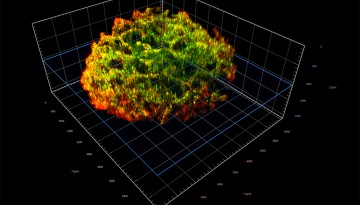
An interdisciplinary Cornell team has identified a new mechanism regulating tumor growth in the skeleton, the primary site of breast cancer metastasis: mineralization of the bone matrix.