Justice-impacted individuals with disabilities are considerably less likely to be employed than people with disabilities who have not interacted with the criminal justice system, according to Yang-Tan Institute research.
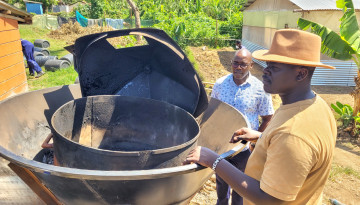
Cornell researchers and Kenyan partners have developed a fertilizer made from human excreta. The product improves soil health and food production, while preventing pollution in informal settlements and the aquatic environment.
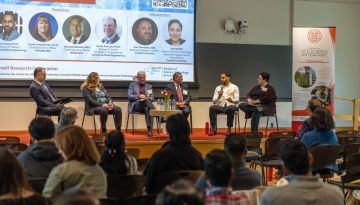
At a daylong event designed to promote academic-industry collaboration, Cornell’s Center for Advanced Technology in Life Science Enterprise cast itself as both a funder of early-stage research and catalyst accelerating connections that move discoveries foward.
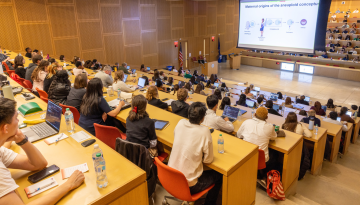
Reproductive health researchers from across the Northeast gathered at Cornell University April 30–May 1 to examine infertility, embryo development and reproductive aging at the 2026 Tri-State Symposium on Reproductive Sciences.
Cornell engineers have developed a robotic collective that behaves less like a machine and more like a material that flows, reshapes and adapts to its environment without centralized control.
Conditions in e-commerce fulfillment centers are harsher than in traditional warehouses, and Amazon's focus on speedy delivery likely lowers job quality, research finds.
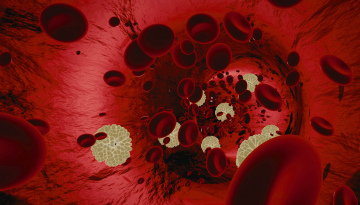
Five innovative immunology research projects have been selected for funding through the Cornell Center for Immunology's 2026 Multidisciplinary Seed Grants.
Complex health challenges require expertise from multiple scientific…
Harbes Farm on Long Island relies on a mutually beneficial collaboration with Cornell researchers, a partnership that has made the family’s three farms key destinations for Long Island agritourism.