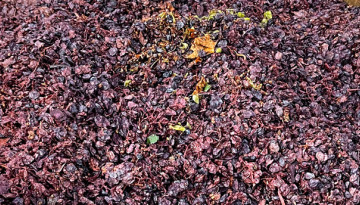
A new study finds that grape pomace – the skins, seeds and stems left over from winemaking – may match the growth-promoting effects of antibiotic additives in broiler chickens, without the public health risks.
Cornell astronomers are deploying a new instrument that grants them, for the first time, a better view of the universe’s earliest galaxies, which can’t be observed individually with ground- or space-based telescopes.
The Cornell High Energy Synchrotron Source (CHESS) will host its annual High Energy X-ray Techniques (HEXT) School next week, bringing graduate students and early-career researchers together for an intensive introduction to synchrotron science and high-energy x-ray research methods.
Researchers found entropy can help bind certain pairs of molecules faster and more robustly – an approach that could have broad applications in drug development and forming new materials.
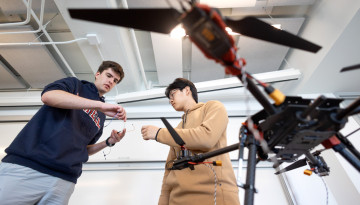
Students in a Duffield Engineering class are equipping a racing baton and a flying drone with Internet of Things technology to address challenges in and around Geneva, N.Y.
While recreational cannabis laws have significantly reduced arrests for cannabis possession and sales, racial disparities in arrests still exist, according to a new study from Weill Cornell Medicine, Instituto Tecnológico Autónomo de México and the University of Texas at Austin.
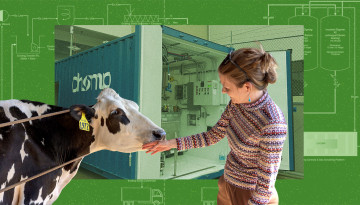
One of the newest additions to Cornell’s Living Lab, the anaerobic digester will generate electricity and provide a real-world testbed for researchers across campus.
All life forms need to continuously adapt to temperature changes to survive. Now, Weill Cornell Medicine investigators studying a bacterial protein have identified a new mechanism of sensing cold temperatures.
Microbes that cause an infection remain biochemically active after they die, continuing to trigger a host’s immune system while also making the immune response less effective.