A Cornell-led collaboration has used state-of-the-art computational tools to model the chaotic behavior of Planckian, or “strange,” metals. This behavior has long intrigued physicists, but they have not been able to simulate it down to the lowest possible temperature until now.
In “Racism and the Future of Memorials,” a July 13 webinar, architects and scholars discussed Confederate monuments, transitional justice memorials and the remnants of black heritage in Harlem.
Cornell researchers have designed the first wrist-mounted device that successfully and continuously tracks finger movements without the use of external cameras.
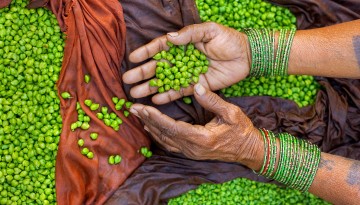
A new report from the Tata-Cornell Institute for Agriculture and Nutrition, has mapped opportunities for India to reduce hunger and improve overall nutrition by reorienting its agricultural policies in favor of more nutritious foods.
Buddy, a 13-year old briard rescue dog, is one of three dozen dogs in an ongoing study on treating persistent gastrointestinal problems with changes in their diets. The results so far have been remarkable.
In the midst of COVID-19, it’s common to feel stress levels rise when we hear the word “virus.” But Cornell-led research reveals that the sound of the word itself was likely to cause stress – even before “corona.”
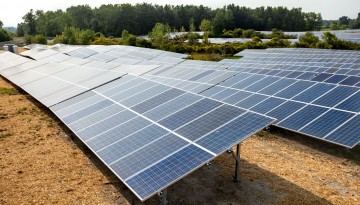
Cornell researchers are studying solar leasing on farmland in New York to better understand the economic, legal, and community issues associated with solar energy initiatives.