As China creates more green space near its cities, the modernization plan – relocating 250 million rural villagers into urban centers by 2025 – has a dark side: socioeconomic inequity.
Workers who signal their independence from other people are judged to have more creative potential than those who seem more socially connected, according to a new study from researchers in the ILR School.
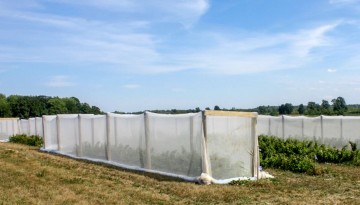
The effectiveness of exclusion netting in protecting New York state's berries from the invasive spotted wing drosophila is documented in new research from Greg Loeb, professor of entomology at Cornell AgriTech.
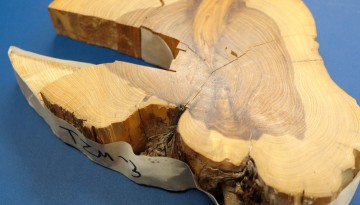
Sturt Manning, the Goldwin Smith Professor of Classical Archaeology, is leading investigations into the timelines of ancient events, using tree ring data to refine the widely used radiocarbon dating method.
Scientists will gather virtually Oct. 7-9 for the Borlaug Global Rust Initiative’s virtual technical conference to discuss strategies to safeguard the health of wheat, one of the planet’s most important food sources.
A Cornell-led collaboration has created the first microscopic robots that incorporate semiconductor components, allowing them to be controlled – and made to walk – with standard electronic signals.