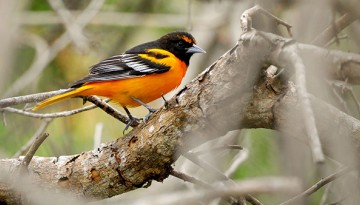
The debate is over: According to scientists from the Cornell Lab of Ornithology, Bullock’s and Baltimore orioles will remain separate species, despite hybridization where their ranges meet in the Great Plains.
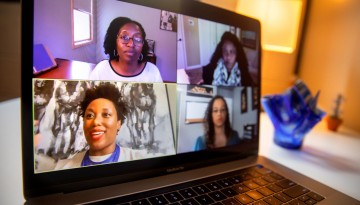
“Systemic Racism and Health Equity,” a webinar hosted July 23 by the Cornell Center for Health Equity, featured insights from three expert panelists and moderator Jamila Michener, associate professor of government and center co-director.
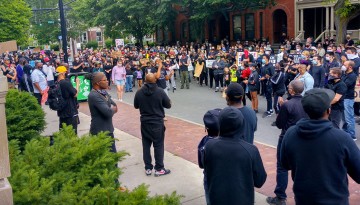
The Rural Humanities initiative has chosen “Rural Black Lives” as its theme for 2020-21, and its projects and programming will concentrate on the visibility of Black lives in rural central and western New York state.
A Cornell-based startup has shifted its platform’s technology in response to the pandemic, ensuring social distancing in the workplace and enabling companies to bring employees back to work safely.
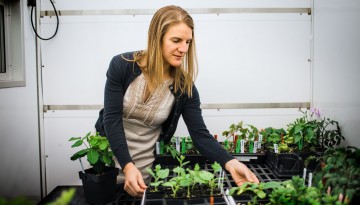
The National Science Foundation recently awarded Margaret Frank, assistant professor of plant biology, a $1.3 million Faculty Early Career Development Program grant for her study of mRNA communication in plants.
In a new paper, Cornell Tech researchers identified a problem that holds the key to whether all encryption can be broken – as well as a surprising connection to a mathematical concept that aims to define and measure randomness.
A pilot program proposed by two Cornell Law School scholars seeks to attract highly skilled immigrants through a points-based selection process, a change they say would benefit the U.S. immigration system and the economy.
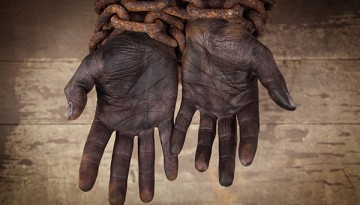
Freedom on the Move, a database documenting the lives of fugitives from American slavery through newspaper ads placed by slave owners, has received a $150,000 grant from The Andrew W. Mellon Foundation.
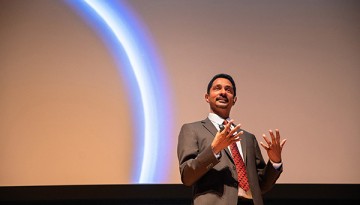
Ray Jayawardhana, the Harold Tanner Dean of Arts and Sciences and professor of astronomy, delivered a keynote address to approximately 1,000 K-12 teachers at the National Math and Science Initiative virtual conference.