The average American adult is exposed to nearly 600 alcohol ads on TV each year, and more exposure is linked to higher levels of drinking, according to a Cornell study.
Women are more likely than men to hear “white lies” – inaccurate performance feedback in job evaluations – according to a new study by researchers in the Department of Psychology.
Students reflected on their learning experiences and future goals in community engagement as they completed a leadership certificate program this spring.
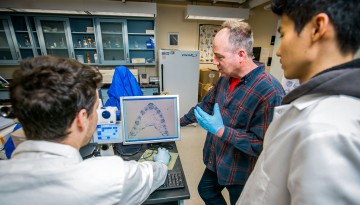
Philippa Johnson, a clinical radiologist in the Cornell College of Veterinary Medicine, has created feline, canine and equine brain atlases to help improve magnetic resonance imaging diagnostics.
The Cornell High Energy Synchrotron Source will partially restart operations in June to conduct research related to treatment of SARS-CoV-2, the virus that causes COVID-19.
Plant biologist Michael Scanlon received a $1.8 million grant from the National Science Foundation Plant Genome Research Program to continue his research on the process of shoot development in maize.
Éva Tardos, the Jacob Gould Schurman Professor of Computer Science, has been elected to the American Philosophical Society, the oldest learned society in the United States.
Risk communicators must get trust, tradeoffs and preparedness right as the COVID-19 pandemic progresses, according to Cornell experts Dominic Balog-Way and Katherine McComas.
Wheat scientists from China, Ethiopia, Germany, India and Uruguay have been honored by the Cornell's Borlaug Global Rust Initiative as Jeanie Borlaug Laube Women in Triticum Early Career awardees.