Matthew Velasco, assistant professor of anthropology in the College of Arts and Sciences, has been named a 2020 Career Enhancement Fellow by the Woodrow Wilson National Fellowship Foundation.
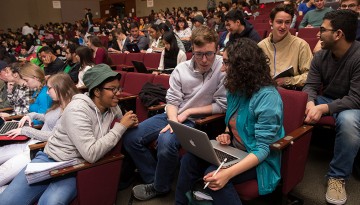
Men participated more in an active learning STEM course, while women reported lower perceptions of their scientific abilities and more likely to feel judged based on gender, a new Cornell-led study has found.
Cornell’s Ithaca campus is making preparations to resume one of the core aspects of the university’s mission: research. The university has been cleared by New York state to restart certain research activities in a staged, limited manner.
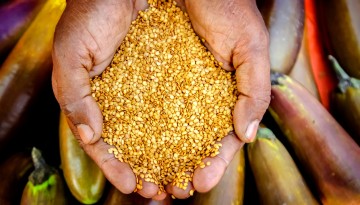
Farmers in Bangladesh achieved significantly higher yields and revenues by growing insect-resistant, genetically engineered eggplant, a new Cornell study has found.
Cornell researchers combined genetic engineering, single-molecule tracking and protein quantitation to get a closer look at how living bacteria identify – and then build resistance to – toxic chemicals and metals. The knowledge could lead to the development of more effective antibacterial treatments.
The Cornell Center for Social Sciences has awarded nearly $110,000 in rapid response grants to help faculty pursue nine research projects related to the COVID-19 pandemic.
Séamus Davis, the James Gilbert White Distinguished Professor Emeritus of physics, has received a $1.6 million five-year grant renewal from the Gordon and Betty Moore Foundation to continue his studies of quantum materials.
Economists Eleonora Patacchini and Marco Battaglini found that federal appellate judges, who are randomly assigned to judicial panels, are more likely to hire women to court clerkships after serving on panels with female colleagues.