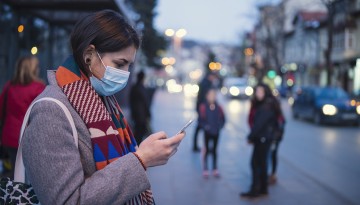
A statistical analysis of all 50 states and Washington, D.C., found that social distancing measures slowed the spread of coronavirus on the whole, but did not reduce the number of new infections per day.
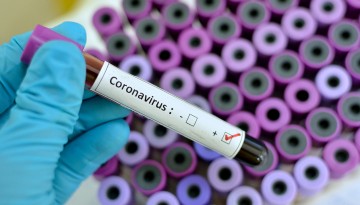
The Office of the Vice Provost for Research has announced a new seed grant mechanism to fund preliminary investigations into medical and biological aspects of SARS-CoV-2, the virus that causes COVID-19.
Cornell researchers used a form of a rotational oscillation, called orthogonal shear, to manipulate the solidification of thickening fluids under compression and extension and explore how these materials solidify.
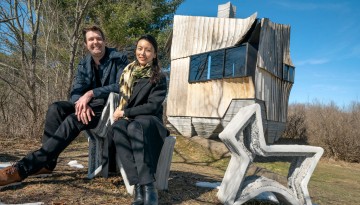
Architecture professors Leslie Lok and Sasa Zivkovic designed and built a cabin in Tompkins County highlighting sustainable use of materials — wood from ash trees and 3D-printed concrete.
A new study of planaria, a type of flatworm, shows how stem cells are able to postpone their own death in order to respond to an injury that needs their attention.
Steve Hilgartner, professor of Science and Technology Studies, has received funding from the National Science Foundation and the Cornell Center for Social Sciences, to lead international research on COVID-19 policy.
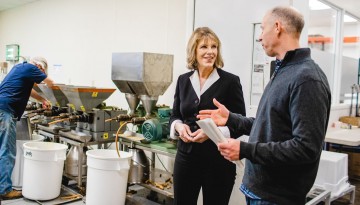
Since its doors opened in September 2018, Cornell AgriTech's Center of Excellence for Food and Agriculture has supported more than 50 New York-based companies and helped raised $12.3 million to grow businesses.
Collaborating across disparate disciplines to tackle the grand challenges facing humanity is intrinsic to Cornell’s unique brand of research innovation.
Graduate School Dean Barbara Knuth is inspired daily by the scholarly work of Cornell’s graduate students. Their innovations and intellectual energy are vital to Cornell’s research productivity.