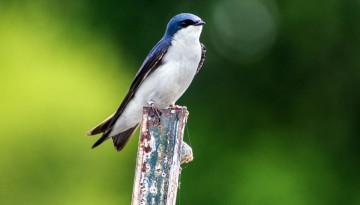
Cornell researchers have discovered a negative relationship between the temperature during tree swallows’ development and their hormonal response to stressors as adults. Specifically, they found that colder temperatures during the development stage had an effect on swallows later in life.
Researchers are using tiny sandwich structures of mirrors, called microcavities, to trap light and force it to interact with a layer of molecules, forming a new hybrid state that mixes light and matter. This process could lead to brighter, more efficient LEDs.
Researchers from the University of Hyderabad in India and the College of Veterinary Medicine have identified a compound that could be part of a strategy to improve the effectiveness of the dengue vaccine.
Five Cornell faculty members have been elected fellows of the American Association for the Advancement of Science, the world’s largest general scientific society.
Research co-authored by assistant professor of history Stephen Vider reveals that community-based clinicians play a key role in reshaping mental health care for LGBT people and broader attitudes about sexuality and gender.
Suzanne Lanyi Charles, assistant professor of city and regional planning, looks at the effects of large corporations’ converting foreclosed houses into rental units in a pair of recently published research papers.
A team led by physics professors Itai Cohen and Paul McEuen is using the binding power of magnets to design self-assembling systems that potentially can be created in nanoscale form.
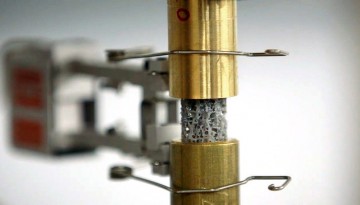
Cornell researchers have made a new discovery about how seemingly minor aspects of the internal structure of bone can be strengthened to withstand repeated wear and tear, a finding that could help treat patients suffering from osteoporosis and create durable, lightweight materials.
ILR students, staff and faculty and alumni will explore the theme Inequality and Work in 22 projects being funded by the ILR School through its annual research grant program.