In a review of thousands of peer-reviewed studies, the What We Know Project an initiative of Cornell’s Center for the Study of Inequality, has found a strong link between anti-LGBT discrimination and harms to the health and well-being of LGBT people.
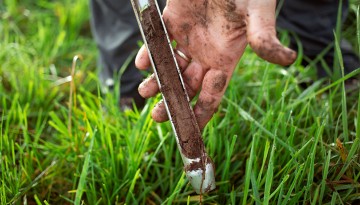
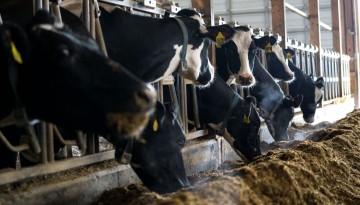
Researchers from Cornell and the University of Wageningen used a social psychology approach to understand how dairy farmers’ views impact how and when they use antibiotics to treat their cows.
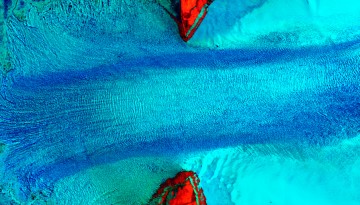
Cornell geologists, examining the desolate Vavilov ice cap on the northern fringe of Siberia in the Arctic Circle, have for the first time observed the rapid ice loss from an improbable new river of ice.
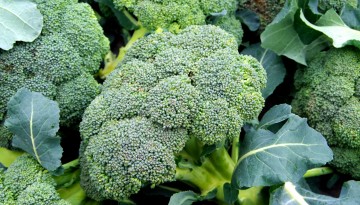
In tests, consumers in upstate New York were willing to pay more for broccoli grown in New York when they knew where it came from, Cornell researchers found.
Orbiting 250 miles above the Earth on the International Space Station, astronaut and station commander Luca Parmitano on Dec. 10-11 conducted a Cornell-designed experiment that will help validate numerical models used for a number of industrial and geophysical applications.
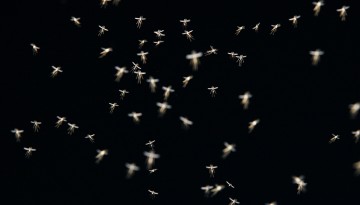
Four Cornell researchers took a deeper look at mosquito reproduction with the goal of helping humans combat outbreaks of diseases such as dengue and Zika, which are worsening as the climate warms.
Cornell researchers developed a first-of-its-kind model to control traffic and intersections in order to increase autonomous car capacity on urban streets, reduce congestion and minimize accidents.
Staff, university leaders, industry partners and government representatives attended a Dec. 5 celebration of the launch of the Cornell-Brookhaven ERL Test Accelerator facility, known as CBETA.