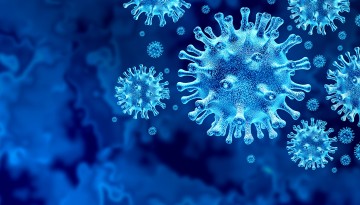
The “One Health” approach is perfectly suited to tackling the COVID-19 pandemic, the most serious public health crisis in recent history, Cornell researchers said during the university’s COVID-19 Summit, a virtual event held Nov. 4-5.
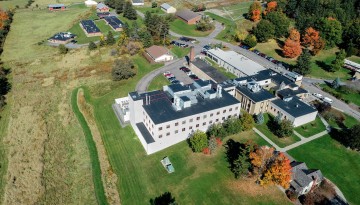
The Baker Institute for Animal Health has evolved and grown since its founding 70 years ago, and its breakthroughs regarding canine infectious diseases have established it as a global center for animal health research.
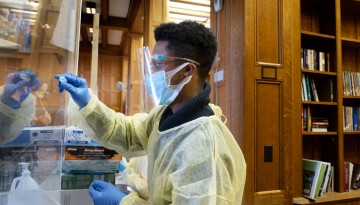
At Cornell, committed leaders, expert faculty, trained staff and student hires have worked tirelessly behind the scenes to create a winning strategy to reactivate campus and keep the community safe from COVID-19.
Cornell’s network of business incubators and accelerators have developed into a growing and robust entrepreneurial engine nurtured with resources, training and mentorship that help faculty, research staff and graduate students launch marketable ideas and technologies.
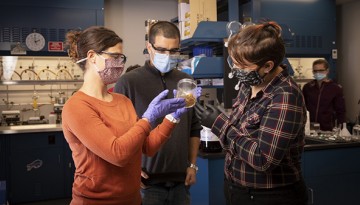
A Cornell-led project will use computer modeling and outreach to find optimal strategies to minimize COVID-19 cases and transmission among workers in food processing facilities, while maintaining the best possible production.
Irene Sumbele, a visiting scientist with the Master of Public Health program at the College of Veterinary Medicine, has been named the 2020 Beau Biden Scholar by the Institute of International Education’s Scholar Rescue Fund.
Dottie, a 3-month old bobcat, came to Cornell Animal Hospital for hip surgery after her keepers think she fell in her enclosure. She is recovering well.
The Office of Engagement Initiatives recently awarded Engaged Curriculum Grants to 19 teams of faculty and community partners that are developing community-engaged learning courses, majors and minors across the university.
A new interdisciplinary study from the College of Veterinary Medicine shows that the protein that lubricates our joints may actually be a signal of impending arthritis in animals and humans.