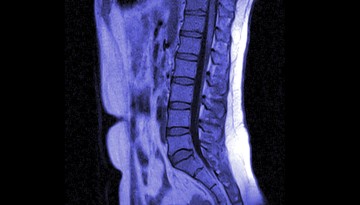
The bones that form the spine are derived from a distinct type of stem cell that secretes a protein favoring tumor metastases, according to researchers at Weill Cornell Medicine, a discovery that opens up a new line of research on spinal disorders.
Cornell University’s Life Sciences Technology Innovation Fellowship, formerly known as the BioEntrepreneurship Initiative, enters its second year in 2023-24 with a new cohort of 15 business students and 12 researchers.
The $1.7 million grant will help scientists with expertise in artificial intelligence and machine learning to address complex biomedical challenges in nutrition and health.
A member of an important class of ion channel proteins can transiently rearrange itself into a larger structure with dramatically altered properties, according to a study led by researchers at Weill Cornell Medicine.
An international phase 3 clinical trial found that a new targeted treatment, given in combination with a standard chemotherapy, extended survival for select patients with advanced gastric or gastroesophageal junction cancer.
Severe COVID-19 infection triggers changes that affect gene expression in immune system stem cells, causing alterations in the body’s immune response, according to a new study by Weill Cornell Medicine and Jackson Laboratory investigators.
Members of the Weill Cornell Medicine Class of 2027 received their short white coats on Aug. 15 during the annual White Coat Ceremony, officially marking the beginning of their medical education.