Cornell is a global leader in sustainability and climate change research, teaching and engagement. Our campuses are living laboratories for developing, testing and implementing solutions that address these most challenging issues.
Wine’s leftovers could help wean chicken farms off antibiotics

A new study finds that grape pomace – the skins, seeds and stems left over from winemaking – may match the growth-promoting effects of antibiotic additives in broiler chickens, without the public health risks.

Sea Grant seeks graduate students for 2027 Marine Policy Fellowship Program in D.C.

New York Sea Grant is looking for graduate students to apply for Sea Grant’s John A. Knauss Marine Policy Fellowship, a nationwide program that provides year-long unique opportunities to work in Washington, D.C. executive and legislative offices where they contribute to real-world marine policy work.   

Around Cornell

Over hill and dale, students’ Internet of Things projects benefit Finger Lakes communities

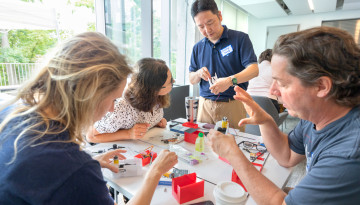
Students in a Duffield Engineering class are equipping a racing baton and a flying drone with Internet of Things technology to address challenges in and around Geneva, N.Y.

From the Living Lab: Small biodigester to fuel research, extension

One of the newest additions to Cornell’s Living Lab, the anaerobic digester will generate electricity and provide a real-world testbed for researchers across campus. 

Entrepreneurial students win awards for summer work on their startups

Thirty student startups received Human Spirit, Beck Fellows and Cane Entrepreneurial Scholars awards this summer from Entrepreneurship at Cornell, funding that will allow students to work on their startups rather than take traditional summer positions.

Around Cornell

Ph.D. student finds new flower in Finger Lakes forests

Actaea rhodostigma – or the pink baneberry – the first new flowering plant species identified in New York in nearly a decade.

From the Living Lab: Rooftop heat recovery slashes Cornell’s energy use

For the latest advance in sustainability on Cornell’s campus, look to the new heat recovery systems atop Olin Hall, Duffield Hall and the Biotechnology Building.

Cornell Atkinson announces $1.24M in joint EDF grants

The Cornell Atkinson Center for Sustainability and Environmental Defense Fund will distribute $1.24 million to 12 projects co-led by Cornell and EDF scientists for research addressing several sustainability topics.

Student-built methane sensor aids mangrove restoration efforts

A student-built methane sensor device is empowering researchers and indigenous communities to protect and restore mangrove forests in Colombia.