Veterans' rights activist Gus Kappler ’61, M.D. ’65, spoke on campus Sept. 23 about his experiences as a surgeon in Vietnam and ongoing poor treatment of U.S. veterans.
An MBA student who attended the People’s Climate March asserts that business is the largest catalyst for change, when it comes to transitioning to a carbon-neutral economy.
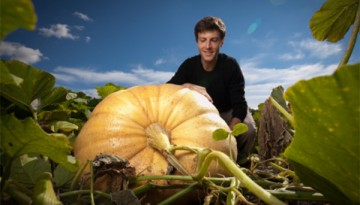
Relay teams hope to squash their competition at the first Big Red Pumpkin Regatta on Beebe Lake Saturday, Oct. 4. It is hosted by a graduate student group Cornell Flotilla.
Ephrahim Garcia, Cornell professor of mechanical and aerospace engineering, died Sept. 10 at the age of 51. A celebration of his life will be held Nov. 7.
Historian Edward Baptist provides an account of slavery's role in America becoming a global superpower in his new book, "The Half Has Never Been Told: Slavery and the Making of American Capitalism."
College of Human Ecology legend Urie Bronfenbrenner, who taught at Cornell for 50 years and died in 2005, was the subject of a symposium on campus Sept. 18.
The Sept. 22 grand opening of Rev: Ithaca Startup Works drew more than 100 local government leaders, business partners and higher education officials to celebrate the collaborative venture’s newly finished space, and to welcome its first four members.
The Department of Neurobiology and Behavior celebrates its 50th anniversary this year. About half of the department's doctoral alumni will return to campus Nov. 1.
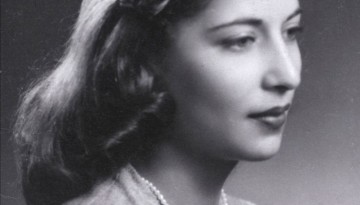
Supreme Court Justice Ruth Bader Ginsburg '54 held a conversation with College of Arts and Sciences Dean Gretchen Ritter '83 at the New-York Historical Society Sept. 18.