Cornell University’s “Unmasking the CCP” lecture series will feature talks by former U.S. Ambassador Michael McFaul Oct. 23 and historian Frank Dikötter Oct. 27 on democracy, communism and China’s international role.
Private equity firms’ investment in home care agencies perpetuates poor working conditions for workers by continuing the exploitation that is prevalent across the industry, according to a new study from the ILR School’s Worker Institute.
A new book, “Your Immune System,” written by Gary Koretzky ’78, vice provost for research and a professor emeritus of medicine at Weill Cornell Medicine, aims to demystify immunology for laypeople.
In financial disclosures, particularly by companies that are coming out of tough times, a firm’s verbal circuitousness can paint a fuller picture of a company’s prospects, a Cornell research group found.
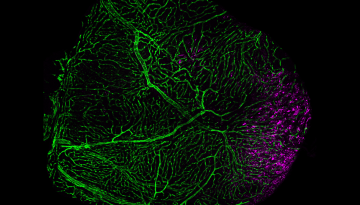
Researchers at Weill Cornell Medicine, working with zebrafish, have discovered a new cell type that may help regulate blood vessel growth in the heart during development and in response to injury.
As mathematicians work through challenges related to AI, Cornell math faculty members are leading the field with work integrating AI into math and mathematics into AI.
Cornell is expanding its expertise in artificial intelligence and data science thanks to the arrival of new faculty, with support from the Radical Collaboration initiative, building a research community that reaches across disciplines.
A programmable photonic chip that can be reconfigured to perform different tasks could make quantum technologies more flexible – an approach associate professor Peter McMahon will explore as a 2026 Experimental Physics Investigator with the Gordon and Betty Moore Foundation.
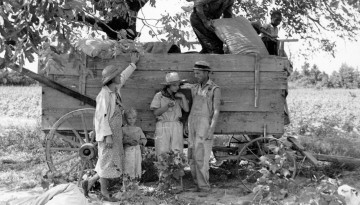
A Cornell University Library exhibit, “Weathering the Storm,” which examines the intersection of the environment, labor and workwear, opens Oct. 8 at the ILR School’s Catherwood Library.
As a Kluge Chair, Jackson is invited to conduct research using the collections at the Library of Congress and to interact with congressional members and staff.
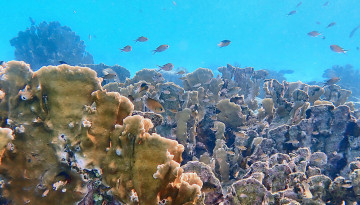
A doctoral student and a team of Cornell researchers and colleagues created WildFin, a data set composed of nine hours of video that they labeled frame-by-frame with fish behaviors.