A new study finds that tariffs on Canadian power could reduce the amount of imported electricity, raise prices, increase carbon emissions and make the power system more vulnerable to extreme weather.
At a talk hosted by Cornell University’s Program on Freedom and Free Societies on Oct. 19, Brian T. Allen will discuss how democracies judge art and architecture.
Surgery to remove lymph nodes in the neck may interfere with cerebrospinal fluid (CSF) drainage from the brain, contributing to cognitive impairment, according to new multicenter research led by Weill Cornell Medicine scientists.
A. Reeve Parker, professor emeritus of literatures in English in the College of Arts and Sciences and a scholar of British Romanticism, died Sept. 16 in Ithaca, New York, at age 89.
Cornell researchers’ analysis of 1.5 million petitions on Change.org showed that AI writing assistance altered the wording of petitions, increasing their homogeneity and length, but did not improve petition outcomes.
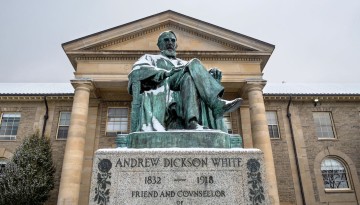
Cornell faculty members, academic departments and groups of departments are invited to submit nominations for the A.D. White Professors-at-Large Program in the fields of arts, humanities, life sciences and physical sciences.
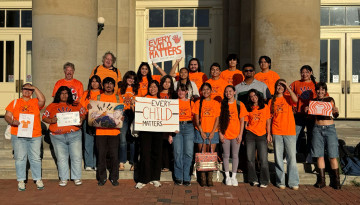
Cornell Cinema and the American Indian and Indigenous Studies Program suggest films for the Cornell community to watch and reflect on for Orange Shirt Day.
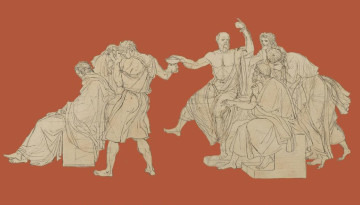
In his new book, “How to Speak Freely,” classicist Michael Fontaine of the College of Arts and Sciences shows that thousands of years ago, Athenians were struggling with the same topics societies struggle with today.
A collaboration between the U.S. Forest Service and the Cornell SC Johnson College of Business aims to shape sustainable tourism development for Puerto Rico’s El Yunque National Forest.
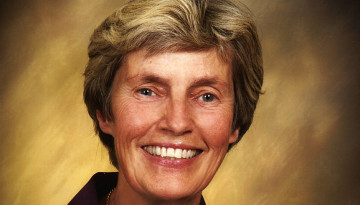
Tove Helland Hammer ’69, professor emerita of organizational behavior in the ILR School and the first female editor of the ILR Review, died on Sept. 12 in Ithaca. A professor at Cornell for 47 years, Helland was 80.