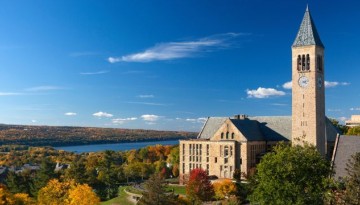
After a year of engaging with university stakeholders and at a critical moment for higher education in the United States, a faculty-led committee has offered its vision for fortifying Cornell’s long-term future in the face of unprecedented challenges.
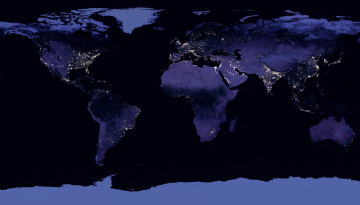
Science historian Sara B. Pritchard describes a massive spike in the amount of artificial light in the 21st century, with light pollution increasing by nearly 10% annually between 2011 and 2022.
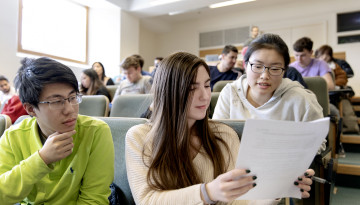
At the Center for Teaching Innovation’s Sept. 30 “What Works” event, Cornell faculty presenters and attendees will share ideas, inspirations, challenges and experiences about how to build a classroom where students feel connected and empowered.
At the Cornell Experience Modernization Initiative Fall Town Hall, university leaders explored how unified systems, trusted data, automation and continuous improvement can help Cornell work more effectively as one institution.
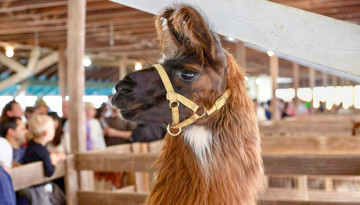
Cornell Cooperative Extension has boosted its support for New York state agritourism as the industry has grown, with the number of participating farms nearly doubling and revenue tripling since 2007.
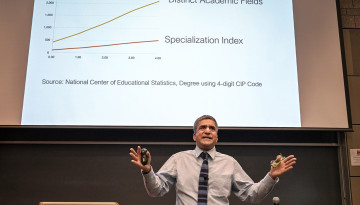
Delivering the ILR School’s Milton R. Konvitz Memorial Lecture on Sept. 17, Rakesh Khurana ’90 said higher education has suffered from bureaucratization over time.
Faced with limited funds for staff training, bosses must decide which employees receive advanced skills training — high or low achievers. Research suggests that might depend on the prevailing fairness norms in the workplace.
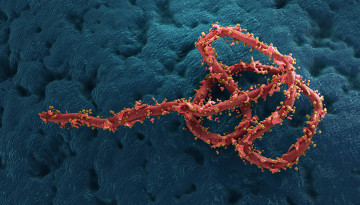
Cornell researchers have developed a portable diagnostic test that can simultaneously detect and distinguish Ebola and Lassa, two serious viruses whose early symptoms can be difficult to tell apart.
The biologic drug interferon-alpha can benefit patients with blood cancers called myeloproliferative neoplasms by forcing mutant blood stem cells to become shorter-lived white blood cells.
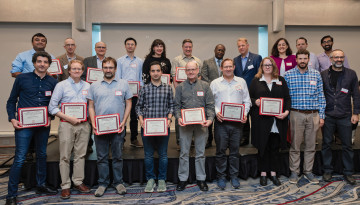
The Cornell Duffield College of Engineering celebrated faculty commitment to education at its 2026 Fall Faculty Reception, honoring this year’s Teaching and Advising Award winners for their contributions to outstanding curriculum design, teaching methods, student mentoring and faculty development.
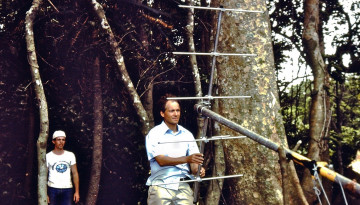
Bryan L. Isacks, the William and Katherine Snee Professor of Geological Sciences Emeritus in the Cornell Duffield College of Engineering who transformed the understanding of Earth’s surface, died Sept. 9 in Ithaca. He was 90.