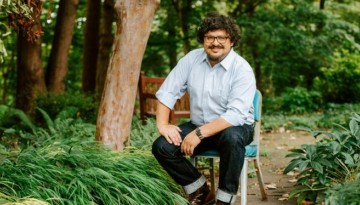
Mario Herrero, a professor in the Department of Global Development and a Cornell Atkinson Scholar, has been appointed to the EAT-Lancet 2.0 leadership team to spearhead the modeling workstream.
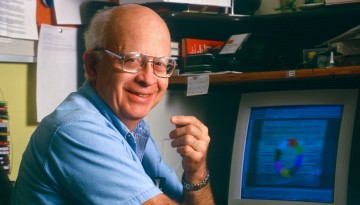
Louis Albright ’63, M.S. ’65, Ph.D. ’72, a world-renowned expert in environmental engineering of agricultural buildings and a pioneer in renewable energy systems, died March 26 in Ithaca.
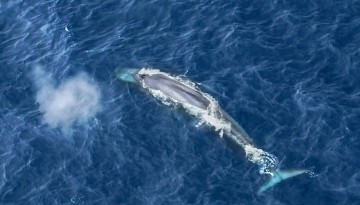
In a watershed “human vs. machine” moment, a machine learning algorithm has detected tricky blue whale calls in sound recordings with greater accuracy and speed than human experts.
As surveying the cosmos for the new James Webb Space Telescope gets hot, Cornell researchers have modeled and synthesized lava in order to discover far-away, volcanic exoplanets.
A $1.2 million grant from the National Science Foundation will fund research on how big data and tech innovations affect organizational relationships on dairy farms and in the dairy industry.
A $60 million grant from the U.S. Department of Agriculture will support organizations across New York – including Cornell CALS – in building climate-smart farms and forests.