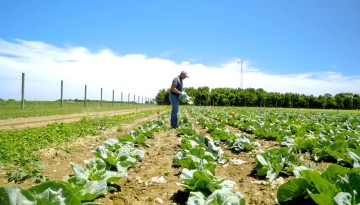
The Long Island Horticultural Research and Extension Center on Sept. 22 will celebrate a century of applied research and education supporting the region’s agricultural and horticultural businesses.
Stanton Shannon, who supported New York farmers through his research on sweet corn, onions and squash, died Jan. 6 in Riverside, California. He was 94.
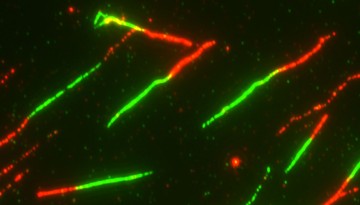
Researchers have uncovered a novel pathway that explains how cancer cells become resistant to chemotherapies, which in turn offers a potential solution for preventing chemo-resistance.
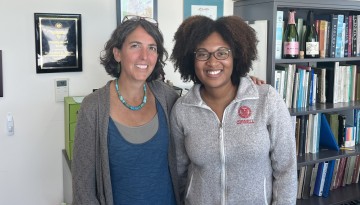
Doctoral candidate Ayress Grinage and Barbara McClintock Professor of Plant Biology and Associate Dean of Faculty Chelsea Specht were selected as recipients of the 2022 Howard Hughes Medical Institute Gilliam Graduate Fellowships for Advanced Study.
Researchers seek to support New York’s food and agriculture producers by calculating the “true cost of food,” which takes into account hidden costs like climate, environmental, fiscal, health and workers impacts.
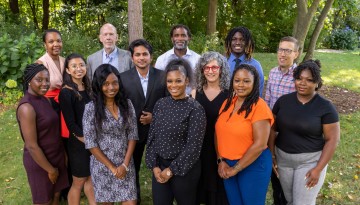
Eight graduate students from Historically Black Colleges and Universities (HBCUs) arrived at Cornell in August as the inaugural cohort of Thomas Wyatt Turner Fellows, as participants in a one-year program designed to support next-generation leaders in inclusive and sustainable agricultural development.
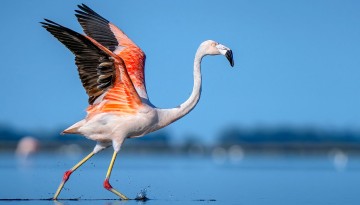
The Cornell Lab of Ornithology and BirdLife International have joined forces to monitor bird populations around the world using the Lab of Ornithology’s massive eBird citizen science database.
The Cornell Council for the Arts launches a celebration of its fifth Cornell Biennial – the largest and most international yet – with exhibition tours, performances and a full day of artist panels, Sept. 15-17.