In a virtual conference on April 15–16, scholars, activists and practitioners from around the world will meet to explore plantations’ deep-rooted legacies, including racial inequality, dispossession and climate change.
Representing Cornell’s four contract colleges, the recipients of the 2021 State University of New York Chancellor’s Award for Student Excellence will be recognized during a virtual ceremony April 14.
The College of Agriculture and Life Sciences (CALS) welcomes six new faculty members, advancing its commitment to pursuing purpose-driven science and improving the lives of people across New York state and around the world.
The findings from Boyce Thompson Institute researchers could point the way to cost-effective, eco-friendly ways of enriching soil and reducing reliance on conventional fertilizers.
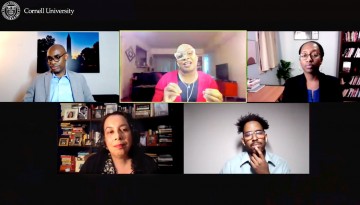
In a “Racism in America” webinar, four Cornell faculty members elaborated on ways the COVID-19 pandemic has shown race-based discrepancies in health care and health outcomes.
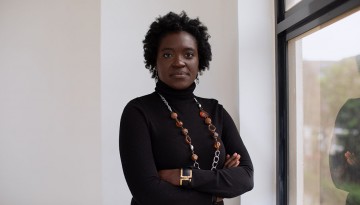
Writer, activist and political analyst Nanjala Nyabola will discuss her upcoming book as part ofGlobal Cornell’s Race and Racism across Borders webinar on April 12 at 11:00 a.m. Following the dialogue, Cornell students will present their original prose, poems and visual art.
Despite agricultural advancements, a Cornell-led study shows that global farming productivity is 21% lower since the 1960s than it could have been without climate change.
Training and resources supporting municipal officials can help incorporate biodiversity into local land use planning, according to research led by Shorna Allred, evaluating a program in New York's Hudson Valley.
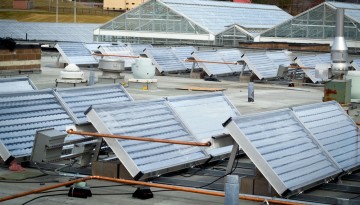
A new solar collector array atop Guterman Research Center is one of several sustainability projects, from reusable dining serviceware to living laboratory experiments, that are continuing apace despite the many interruptions made by COVID-19 to campus life.