Dottie, a 3-month old bobcat, came to Cornell Animal Hospital for hip surgery after her keepers think she fell in her enclosure. She is recovering well.
The Office of Engagement Initiatives recently awarded Engaged Curriculum Grants to 19 teams of faculty and community partners that are developing community-engaged learning courses, majors and minors across the university.
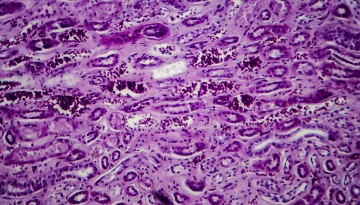
A new interdisciplinary study from the College of Veterinary Medicine shows that the protein that lubricates our joints may actually be a signal of impending arthritis in animals and humans.
Small-scale farmers see a path to solving global hunger over the next decade, thanks to a Cornell-hosted project that used artificial intelligence to cull ideas from more than 500,000 scientific research articles.
Researchers led by Hening Lin have found a new way to potentially treat inflammatory bowel disease, as well as other autoimmune disorders, by targeting a mechanism that regulates the signaling pathway that enables inflammation to occur.
Cornell and the Cayuga Health System are donating COVID-19 testing and analysis to the Ithaca City School District, testing more than 1,200 students this week as the district prepares to reopen for in-person instruction Oct. 5.
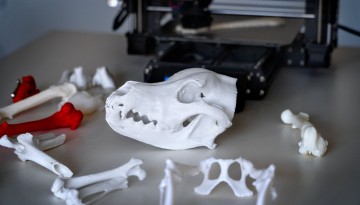
First-year veterinary student Sean Bellefeuille’s startup creates anatomical models of animals with a 3D-printer. These models help veterinary surgeons better prepare for surgery on their patients.
The NSF has awarded a $1.5 million grant for Cornell researchers to study the health dangers, changes in the lake food web and socioeconomic challenges when these algal blooms produce toxins.