Board Governance: Navigating Emerging Technologies and More in a Complex World, a new Cornell Tech immersion program, is set to prepare corporate board members for fast-paced evolutions driving the future of commerce.
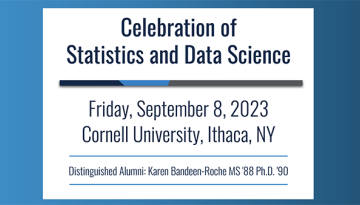
The day-long event will feature talks from seven field scholars, including this year’s recipient of the Distinguished Alumni award, Karen Bandeen-Roche, chair of the Department of Biostatistics at the Johns Hopkins Bloomberg School of Public Health.
This second round of grants from the five-year, multimillion-dollar partnership will fund high-impact research on topics ranging from large language models and recommender systems to dynamic information retrieval and algorithmic fairness.
Researchers are more likely to pen scientific papers with co-authors of the same gender, a pattern not solely due to gender representation across disciplines and time, according to joint research from Cornell and the University of Washington.
Research by J. Nathan Matias, assistant professor of communication in CALS, found that Reddit community members who fact-checked suspect stories led to those stories being dropped in the website’s rankings.
Cornell researchers have shown that data science and artificial intelligence tools can successfully identify when prosecutors question potential jurors differently, in an effort to prevent women and Black people from serving on juries.
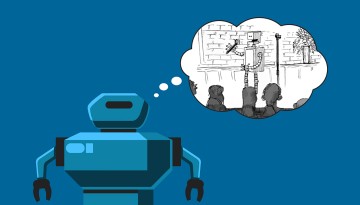
Is artificial intelligence beginning to “understand” humor? In experiments using the New Yorker Cartoon Caption Contest as a testbed, researchers found that it’s making some progress, but isn’t quite there yet.
The initiative is designed to improve standards of online privacy, safety and security, and to establish New York City as the epicenter of cybersecurity research.