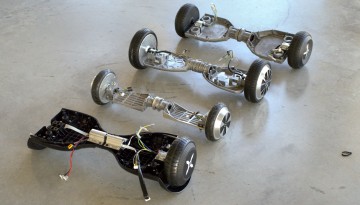
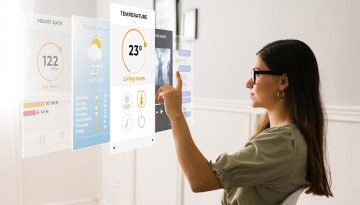
Incorporating sustainability into their field, Cornell information science researchers Ilan Mandel and Wendy Ju introduce “garbatrage,” a framework for prototype builders centered around repurposing underused devices.
Cornell’s Scientific Computing Training Series will resume on Oct. 4; the Zoom-based training is available for free to faculty, students and staff at Cornell, Weill Cornell Medicine, Weill Cornell Medicine-Qatar and Cornell Tech.
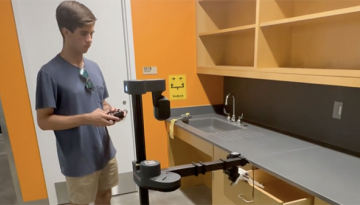
Using a new strategy called superhuman imitation learning, Sanjiban Choudhury, assistant professor of computer science, aims to train home robots more efficiently.
A university committee has released recommendations for how faculty can take generative artificial intelligence into account when considering learning objectives for their students.
The $1.7 million grant will help scientists with expertise in artificial intelligence and machine learning to address complex biomedical challenges in nutrition and health.
The new additions have expertise in a broad range of computing and information science fields and will shape the next generation of tech leaders and innovators.
During a one-year appointment as an associate vice provost in the Office of the Vice President for Research and Innovation, Natalie Bazarova will support research in the social sciences and other disciplines that rely on large data sets.
Someone wearing augmented reality, or “smart,” glasses could be Googling your face, turning you into a cat or recording your conversation – and that creates a major power imbalance with the nonwearer, Cornell researchers have found.