Generative artificial intelligence threatens to undermine trust in democracies when misused, but may also be harnessed for public good, Sarah Kreps told the President’s Council of Advisors on Science and Technology on May 19.
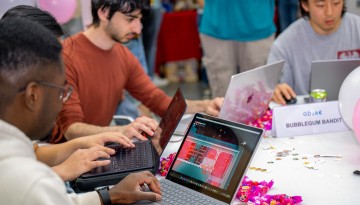
The public is invited to the Game Design Initiative at Cornell showcase, held Saturday, May 20 from 1-4 p.m. in Clark Atrium in the Physical Sciences Building, to play video games created by students in Game Development courses.
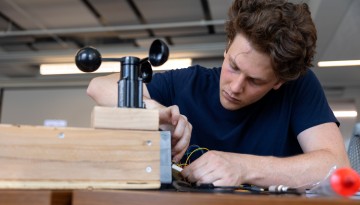
From monitoring blood pressure to potholes: Professor Max Zhang's Internet of Things (IoT) course teaches students how to leverage IoT sensor technology to solve real-world problems and help the community.
A new pre-college certificate program designed to help high school students develop data analysis skills complementary to a wide range of academic and professional fields will be offered at no cost to the children of Cornell faculty and staff and underserved students nominated by local high schools and other partners.
An experiment in which two people play a modified version of the video game Tetris revealed that players who get fewer turns perceive the other player as less likable, regardless of whether a person or an algorithm allocates the turns.
Artificial intelligence-powered writing assistants that autocomplete sentences or offer “smart replies” not only put words into people’s mouths, they also put ideas into their heads, according to new research.
A new cycle of Einaudi Center seed grants will help faculty from six colleges across Cornell tackle issues ranging from the health of endangered wild dogs to the spread of misinformation through social media.
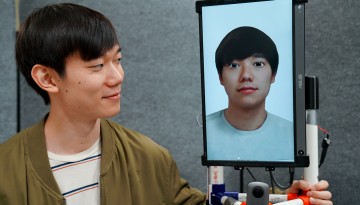
Cornell researchers have developed a robot called ReMotion that occupies physical space on a remote user’s behalf, automatically mirroring the user’s movements in real time and conveying key body language that is lost in standard virtual environments.