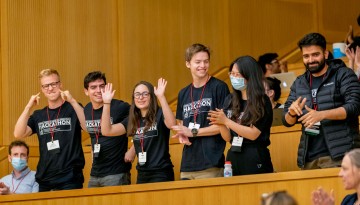
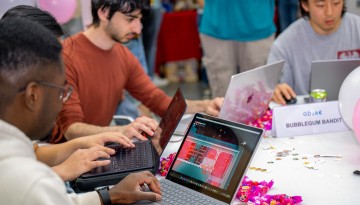
The hackathons, run by Entrepreneurship at Cornell, are open to undergraduate and graduate students from any field and major and take place from Friday evenings through Sunday afternoon.
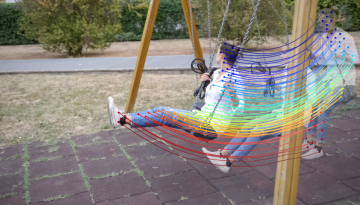
Cornell researchers have developed an optimization tool, OmniMotion, to estimate motion throughout an input video, which has potential applications in video editing and generative AI video creation. It was presented at a conference last week in Paris.
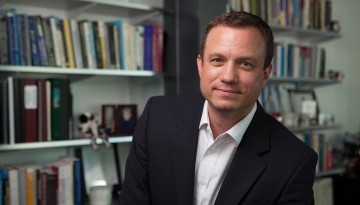
Greg Morrisett has been appointed to a second term as the Jack and Rilla Neafsey Dean and Vice Provost of Cornell Tech, Provost Michael I. Kotlikoff announced Oct. 9.
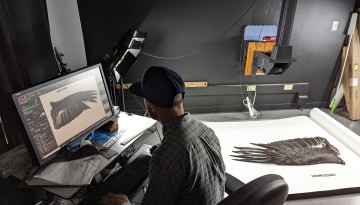
Researchers from the Cornell Lab of Ornithology and the Institute for Computational Sustainability are using big data and AI to model hidden patterns in nature – not just for one bird species, but for entire ecological communities across continents.
A team of Cornell computer scientists has been awarded a $3 million grant from the Defense Advanced Research Projects Agency to leverage reinforcement learning to make computer networks stronger, dynamic and more secure.
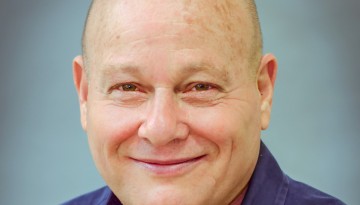
Israel Cidon, former dean of the Andrew and Erna Viterbi Faculty of Electrical and Computer Engineering at Technion-Israel Institute of Technology, has joined Cornell Tech as director of the Joan and Irwin Jacobs Technion-Cornell Institute.
Diversity of thought regarding gamers’ opinions of games makes for better algorithms that help audiences around the globe pick the right games, according to new research from Cornell, Xbox and Microsoft Research.
Cisco Research is providing funding for six research projects that will further the college's leadership in AI and point the way toward innovative solutions to challenges surrounding the use and development of AI models.