Ten Cornell postdoctoral researchers who plan to harness the power of artificial intelligence (AI) in areas like materials discovery, physics, biological sciences and sustainability sciences have been named Eric and Wendy Schmidt AI in Science Postdoctoral Fellows, a Schmidt Futures program.
Students from Cornell and other universities are invited to enroll now for Cornell’s Summer Session, which will feature on-campus, online and off-campus courses. Students can earn up to 15 credits taking regular Cornell courses.
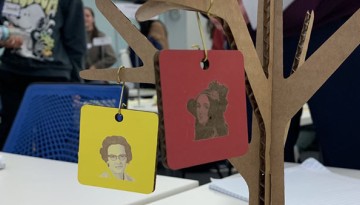
Students in Ithaca and New York City showed off their computer programming skills Saturday, March 4, solving problems with the theme of women’s achievements in computing, in the first of two high school computing contests…
Cornell Law School Professor Charles Whitehead discussed the shifting regulatory environment around crypto and what’s next for the technology in a recent webcast, “Crypto Regulation: Can Securities Laws Keep Pace with Innovation?”
Human assumptions regarding language usage can lead to flawed judgments of whether language was AI- or human-generated, Cornell Tech and Stanford researchers found in a series of experiments.
The Bowers Undergraduate Research Experience (BURE) is a paid summer research opportunity with Cornell faculty, allowing students to develop new skills and gain insights into careers in research.
A simple model that simultaneously simulates swarming behaviors and synchronized timing takes a step toward engineering microrobots and furthering our understanding of such phenomena in biology.
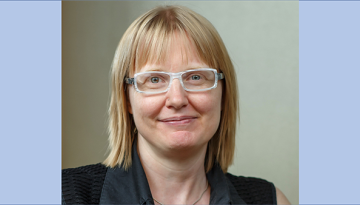
Phoebe Sengers, professor of information science at Cornell Bowers CIS, directs the Culturally Embedded Computing research group; her work focuses on the social implications of technology.