New Cornell research has advanced the design of solid-state batteries, a technology inherently safer than today’s lithium-ion batteries, which rely on flammable liquid electrolytes.
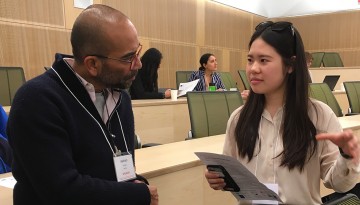
At the Cornell Business Impact Symposium, keynote speaker Ashish Gadnis described a pathway to positive social impact that could help people around the world rise from poverty, reduce gender inequality, vanquish black markets and bring light to shadow economies.
The Atkinson Center hosted a workshop Feb. 13 in Washington, D.C., that outlined an agenda highlighting Cornell’s research strengths in support of a new carbon economy.
A Cornell-led team has found that when robots are beating humans in contests for cash prizes, people consider themselves less competent and expend slightly less effort – and they tend to dislike the robots, too.
As applications grow more complex, companies such as Twitter, Amazon and Netflix are turning to microservices – scores of small applications, each performing a single function and communicating over the network to work together.
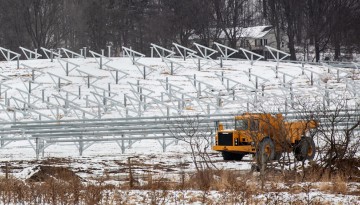
University officials, government representatives and solar power executives ceremonially broke ground March 1 for the new Cascadilla Community Solar Farm at Cornell.
By studying the mechanics needed for tiny one-millimeter copepods to jump out of water, scientists could build robots that use similar jumping techniques for practical purposes.
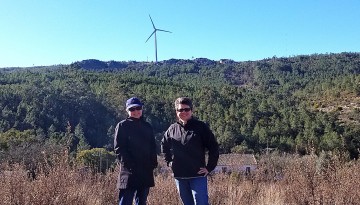
A network of academics from around the United States – including two Cornell wind energy experts – are proposing an 'energy-water corridor' along the U.S.-Mexico border.