The Atkinson Center is partnering with The Nature Conservancy on three funded research projects, related to climate change, renewable energy and wildlife management.
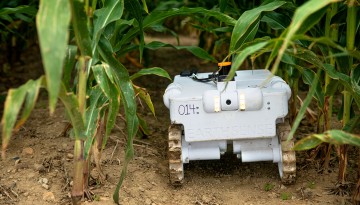
Digital agriculture at Cornell has just been seeded for robust additional growth by being added as a strategic discipline area to the provost's radical collaboration initiative.
The Mars rover Opportunity, NASA’s robotic geologist fitted with an array of tools to search for evidence of water, ended its mission Feb. 13 – three weeks after its 15th anniversary and long past its 90-day warranty.
Research on blood flow in the brain, from the lab of Chris Schaffer and Nozomi Nishimura, could help inform better therapies for people with dementia, including Alzheimer's disease.
Building on Cornell’s decades of fundamental and comparative research in the immunological sciences, Provost Michael Kotlikoff has announced the creation of a new Cornell Center for Immunology.
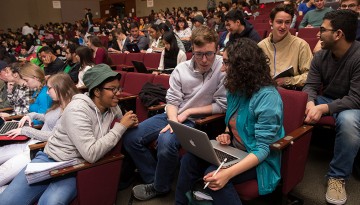
Innovative projects to enhance undergraduate teaching and learning in nine departments have received funding administered by Cornell’s Active Learning Initiative.
A machine learning model trained with years’ worth of forecast and weather data predicts the accuracy of the weather forecast – the basis of a system that can reduce buildings’ energy usage by up to 10 percent.