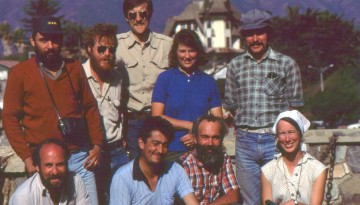
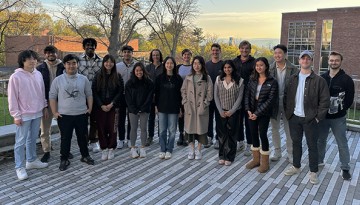
A group of Cornell geologists – known as the Cornell Andes Project – came together in early June to celebrate 40 years of research in South America and their collective success in advancing the understanding of plate tectonics.
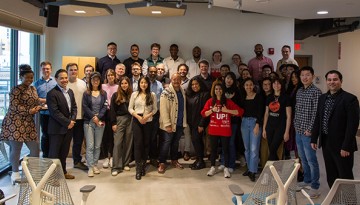
The Samuel Curtis Johnson Graduate School of Management unveiled the diverse group of 25 startups that make up the 2023 Johnson Summer Startup Accelerator (JSSA), the program's largest cohort to date.
Lena F. Kourkoutis, M.S. ’06, Ph.D. ’09, an associate professor in the School of Applied and Engineering Physics, who was internationally recognized for her advances in cryo-electron microscopy, died on June 24 at the age of 44 after living with colon cancer for two years.
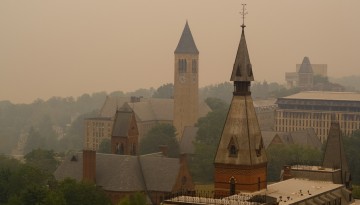
Smoke particulates from wildfires could lead to between 4,000 and 9,000 premature deaths and cost $36 to $82 billion per year in the U.S., according to research by Cornell and a university in China.
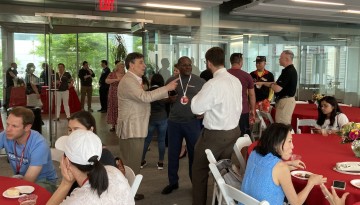
One year at Cornell can lead to a lifetime of memories – and a fulfilling career – according to attendees at the inaugural M.Eng. Reunion Reception, which brought together more than 75 alumni with a Master of Engineering degree on June 10 in Upson Hall Lounge.
The 2023 Kessler Fellows have accepted internships and will spend the summer gaining firsthand entrepreneurial experience. This year’s fellows are working at startups located from Ithaca to Beijing.
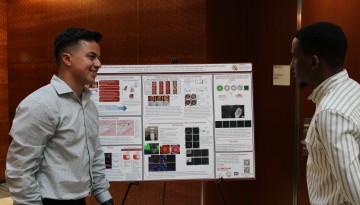
The “Biomedical Engineering Symposium: Tools to Transform Discovery and Care,” brought together dozens of engineers, scientists and practitioners from across Cornell to share research and foster collaborations, with the goal of building the foundation for new, cutting-edge medical treatments and devices.
New Cornell research shows the metaverse – a virtual 3D environment in which the physical and digital worlds converge – could have environmental benefits: lowering the global surface temperature by up to 0.02 degrees Celsius before the end of the century.